Gas Hob vs Induction vs Electric: Which Cooktop Is Best for Indian Kitchen?
Ammon Marketing
Authorized Kutchina Dealer · Ranchi
02 Jul 2026
~ read
TL;DR
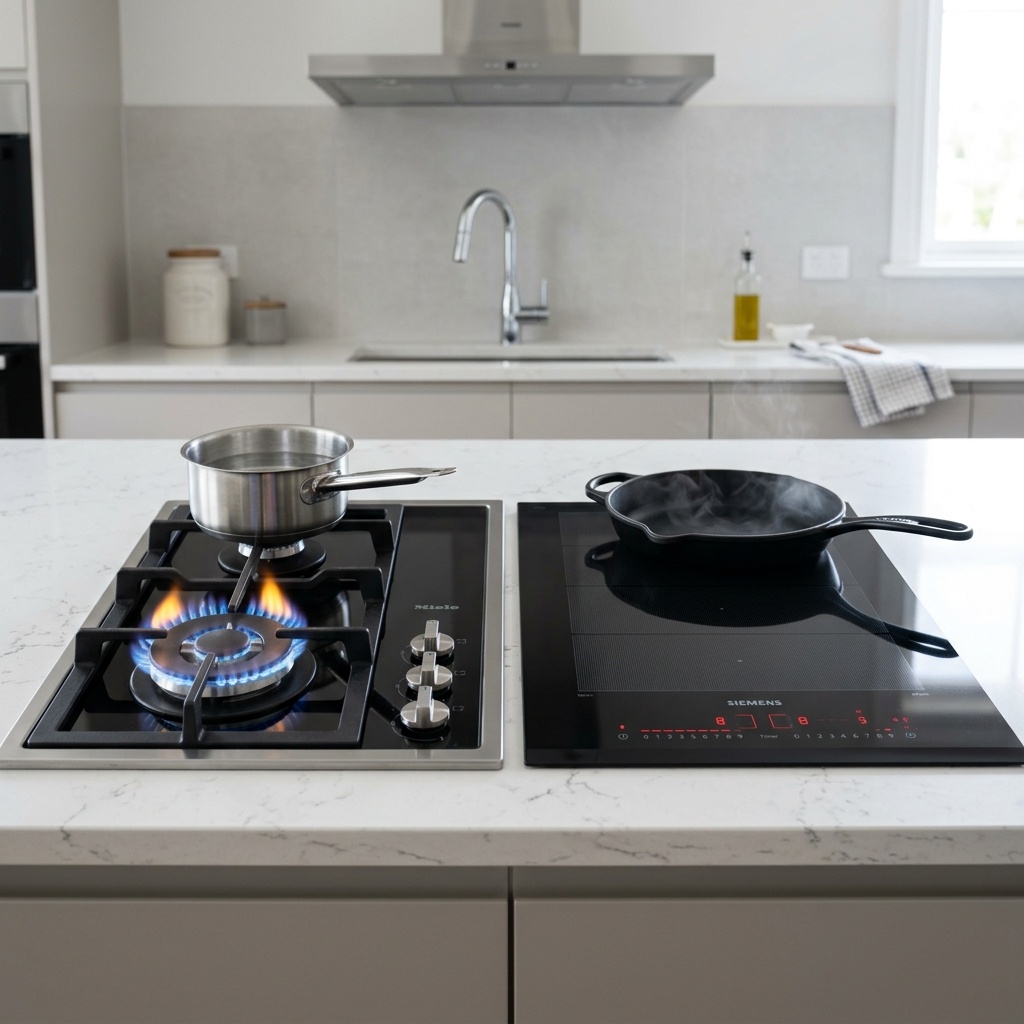
- Gas hob is best for traditional Indian cooking — high heat, wok cooking, tawa roti, open flame tempering all work naturally on gas
- Induction is safer and more energy-efficient but requires compatible (magnetic-base) cookware — not all existing Indian vessels work on induction
- Electric (coil/radiant) hobs are the least popular in India — slow heat-up, fragile glass tops, and not significantly cheaper than induction
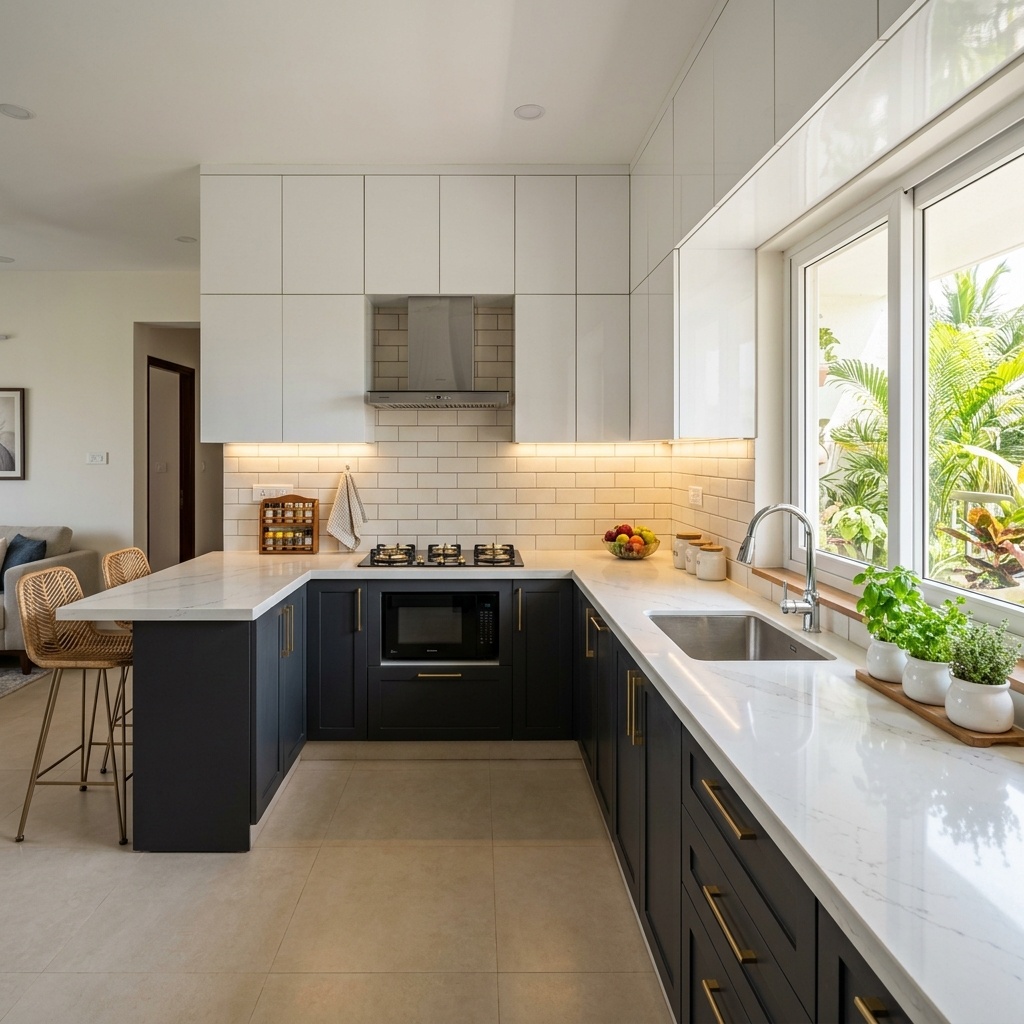
- The most common modular kitchen choice in India: built-in gas hob (2 or 3 burner) paired with a chimney
Quick Answer: For families that cook traditional Indian meals daily (dal, sabzi, roti, frying), a built-in gas hob is the most practical choice. Induction is better for households that want safety (no open flame — ideal for homes with young children or elderly), faster boiling, and precise temperature for baking or low-heat simmering. Many families choose one of each: a 3-burner gas hob for main cooking and a portable induction plate for milk heating and simmering.
The hob is the centrepiece of your kitchen — it determines your cooking style, safety, and energy cost for the next 10–15 years. This guide cuts through marketing claims to give you the honest differences that matter for Indian cooking.
Full Comparison: Gas vs Induction vs Electric
| Factor | Gas Hob | Induction Hob | Electric (Radiant) |
|---|---|---|---|
| Heat Speed | Instant — full heat immediately | Fast — 50% faster than gas for boiling | Slow — 2–3× slower than gas |
| Heat Control | Excellent — visual flame, instant response | Very precise — digital temperature settings | Poor — slow to respond, hard to control |
| Indian Cooking Suitability | Best — tawa, wok, tadka, open flame all work | Good — all except open flame charring | Not recommended for Indian cooking |
| Cookware Compatibility | All cookware (steel, aluminium, clay, copper) | Magnetic-base only (stainless steel, cast iron) | All cookware |
| Safety | Open flame — gas leak risk if not maintained | No flame, no hot surface — auto-shutoff | Hot surface remains hot after off |
| Energy Efficiency | 40–55% efficient | 85–90% efficient | 65–70% efficient |
| Electricity Dependency | Can cook during power outage (manual ignition) | Completely dependent on electricity | Completely dependent on electricity |
| Cleaning | Moderate — burner rings and grates need cleaning | Easy — smooth flat glass, wipe with cloth | Moderate — radiant rings under glass |
| Installation | Needs gas line / LPG connection | Only electrical connection (15A socket) | Only electrical connection |
| Price Range (built-in) | ₹8,000–₹35,000 | ₹12,000–₹50,000 | ₹8,000–₹25,000 |
| Lifespan | 15–20 years (burners replaceable) | 8–12 years (glass top fragile) | 8–10 years |
Gas Hob: What Indian Cooks Need to Know
A built-in gas hob (as opposed to a freestanding gas stove) is flush-mounted into the modular kitchen countertop. It connects to your existing LPG pipeline or gas cylinder supply via a hose. Key specifications to check:
| Specification | What It Means | What to Choose |
|---|---|---|
| Number of burners | How many pots/pans simultaneously | 3-burner for families; 2-burner for couples; 4–5 for large families |
| BTU / kW rating | Heat output — higher = more powerful | Wok burner: 4kW+; Standard: 1.5–3kW; Simmer: 1kW |
| Body material | Hob surface material | Tempered glass (easy clean) or stainless steel (more durable) |
| Auto-ignition | Electric spark ignition vs manual match | Auto-ignition always — safer and more convenient |
| Cast iron vs brass burners | Burner cap material | Brass burners last longer and distribute heat more evenly |
Induction Hob: When It Makes Sense for Indian Kitchens
Induction is increasingly popular in urban Indian apartments where gas connections are unavailable or inconvenient, or where safety around children is a priority. Key things to verify before choosing induction:
- Check your existing cookware: Test each vessel by holding a fridge magnet to the base — if the magnet sticks, the vessel is induction-compatible. Aluminium kadais, earthen pots, and copper vessels don't work on induction. You may need to replace several pieces.
- Tawa roti: Flat tawa for roti is induction-compatible if magnetic-base. The larger the tawa, the larger the induction zone needs to be.
- 15A socket required: A built-in induction hob draws 2,000–3,000W — it needs a dedicated 15A circuit, not a standard 5A socket.
- Power backup: If your area has frequent power cuts, induction is unreliable as a sole cooking method. Keep a backup gas connection or cylinder.
Best of both worlds: Many Indian families install a 2-burner gas hob in the modular kitchen for main cooking (dal, sabzi, frying) and keep a portable induction plate for milk heating, slow simmering, and backup. This combination costs less than a full 4-burner induction hob and gives you the reliability of gas plus the safety of induction where it matters.
Choosing Burner Count
| Burners | Best For | Typical Hob Width |
|---|---|---|
| 2-burner | Couples, small families, studio apartments | 60 cm (600mm) |
| 3-burner | Standard Indian family of 4 — most popular choice | 60 cm (600mm) |
| 4-burner | Large families, those who entertain frequently | 75 cm (750mm) |
| 5-burner | Very large families or frequent entertaining | 90 cm (900mm) |
Frequently Asked Questions
Which is better — gas hob or induction hob for Indian cooking?
Gas hob is better for traditional Indian cooking — it supports wok cooking, open-flame tempering (tadka), roti on tawa, and works with all cookware. Induction is better for safety, energy efficiency, and easy cleaning. The choice depends on your cooking style: if you cook heavy daily Indian meals with multiple pots, gas is more practical. If safety, energy saving, and easy maintenance are the priority, induction is the better choice.
Does induction work for Indian cooking?
Yes, induction works for most Indian cooking — dal, sabzi, rice, rotis on a flat tawa, fried items. The limitations: open-flame cooking techniques (charring rotis directly on flame, certain tandoor-style preparations) are not possible. Existing aluminium or copper vessels are not compatible — you need to verify each vessel with a magnet. Power cuts can interrupt cooking, making gas a more reliable backup.
What cookware works on induction hob?
Only magnetic-base cookware works on induction. A simple test: hold a fridge magnet to the bottom of the vessel — if it sticks, the vessel is induction-compatible. Compatible materials: stainless steel (most are compatible), cast iron, some special aluminium with magnetic base. Not compatible: regular aluminium, copper, earthenware / clay pots. Most modern stainless steel Indian cookware (pressure cookers, tawa, kadai) is induction-compatible.
How many burners should I choose for my kitchen?
For a family of 4 cooking daily Indian meals, a 3-burner gas hob is the right choice — one large burner for the pressure cooker or wok, one medium for sabzi, one small for dal or simmering. 2-burner suits couples or very small kitchens. 4–5 burner is for large families or those who frequently cook for guests. A 3-burner 60 cm hob is the most popular choice in Indian modular kitchens.
Which is more energy-efficient — gas or induction?
Induction is significantly more energy-efficient at 85–90% efficiency vs gas at 40–55%. Induction heats only the vessel (via magnetic induction) — no heat is lost to the surrounding air. This means faster cooking times and lower running costs per meal. However, the cost of electricity vs LPG in your area determines whether this translates to actual savings on your monthly bill.
Can I install a built-in gas hob in an apartment?
Yes — built-in gas hobs are standard in modular kitchens. They connect to your existing LPG pipeline (piped gas) or a gas cylinder via hose. In new apartment buildings in Jharkhand, PNG (piped natural gas) connections are increasingly common — a built-in hob connects directly to the PNG line. Check with your building management whether PNG is available before deciding between gas and induction.
What is the best gas hob brand for Indian kitchen?
Kutchina, Faber, Elica, and Glen are among the top built-in gas hob brands for Indian modular kitchens. Kutchina (available through Ammon Marketing in Ranchi) offers built-in hobs designed for Indian cooking — tempered glass top, auto-ignition, brass burners for even heat distribution, and 2–5 burner configurations. Always choose a hob from a brand that has service support in your city.
Is electric cooktop good for Indian cooking?
Electric coil or radiant hobs are not recommended for Indian cooking. They heat up slowly (2–3× slower than gas), respond poorly to heat adjustments, and are difficult to use for high-heat techniques like stir-frying and tempering. The glass surface of radiant hobs is more fragile than induction glass. There is no significant advantage over induction for the same cost — if you want an electric hob, choose induction instead.
Key Takeaways
- Gas hob is the best choice for daily heavy Indian cooking — instant heat, open flame, works with all cookware
- Induction is better for safety, energy efficiency, and easy cleaning — but requires magnetic-base cookware and a reliable electricity supply
- For most Indian families: 3-burner built-in gas hob is the standard correct choice
- Before choosing induction: test each of your existing vessels with a magnet — non-magnetic vessels won't work and need replacement
- Electric radiant hobs are not recommended for Indian cooking — choose gas or induction instead
See These Ideas in Real Homes

Free · No Obligation
Talk to Our Design Experts
Ammon Marketing Editorial Team
Authorized Kutchina Dealer · Ranchi · Est. 2014
Our guides are written by Ranchi-based kitchen designers and appliance experts with 10+ years of on-the-ground experience. Every recommendation is based on real projects completed in Jharkhand homes — not generic advice from outside the region.