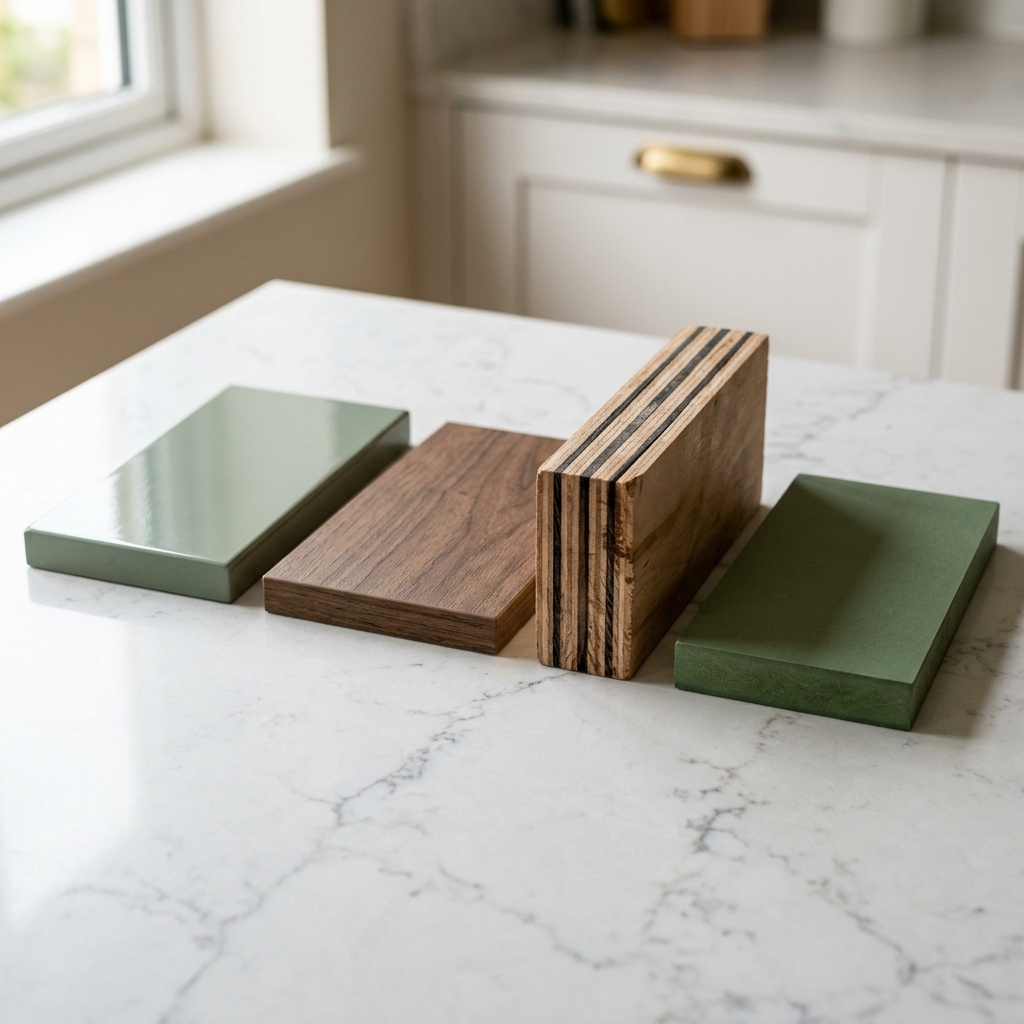
Kitchen Hob Buying Guide India: 2, 3 or 4 Burner, Glass vs SS, Gas vs Induction
Ammon Marketing
Authorized Kutchina Dealer · Ranchi
02 Jul 2026
~ read
TL;DR
- 3-burner gas hob is the most practical choice for Indian families of 3–5 — enough burners for cooking a full meal simultaneously
- 4-burner suits larger families or households where 2 people cook together frequently
- Glass top (toughened glass) is easier to clean than stainless steel but heavier and more fragile
- Auto-ignition is essential — match-lighting a hob is impractical and a safety concern
Quick Answer:For most Indian families of 3–5: a 3-burner auto-ignition glass-top gas hob (60cm wide) is the best all-round choice. For larger families or heavy daily cooking: 4-burner. Induction hob is excellent for apartments with reliable piped gas supply issues or safety-first families but doesn't work with traditional Indian cookware (iron kadai, copper, clay pots). Budget: ₹8,000–₹20,000 for a quality 3-burner built-in gas hob.
Burner Count: Which Indian Family Needs What
| Burner Count | Hob Width | Cost Range | Best For | Limitation |
|---|---|---|---|---|
| 2-burner | 60cm | ₹5,000–₹12,000 | Couples, bachelors, very small family (1–2 people) | Can only cook 2 things simultaneously — dal + one sabzi only |
| 3-burner | 60cm | ₹8,000–₹18,000 | Family of 3–5 — the most popular choice in India | Fine for most Indian meal structures |
| 4-burner | 60cm or 75cm | ₹12,000–₹28,000 | Family of 5+ or two-cook households | Larger 75cm model needs dedicated counter width |
| 5-burner | 90cm | ₹20,000–₹45,000 | Very large families, joint families, frequent entertainers | Requires 90cm counter — not standard in all kitchens |
Glass vs Stainless Steel Hob
| Factor | Glass Top (Toughened) | Stainless Steel Top |
|---|---|---|
| Cleaning ease | Very easy — flat surface, wipe clean | Moderate — grates and burner caps collect residue |
| Appearance | Sleek, premium, modern | Classic, professional look |
| Durability | Good — toughened glass; can crack under sudden cold water or hard impact | Excellent — virtually indestructible |
| Heat distribution | Same — same burners underneath | Same |
| Weight | Heavier | Lighter |
| Repair | Glass crack = full unit replacement (no repair) | Grate or burner cap can be replaced individually |
| Cost | Slightly higher | Slightly lower |
| Best for | Modern modular kitchens wanting easy cleaning | Heavy daily Indian cooking, longevity priority |
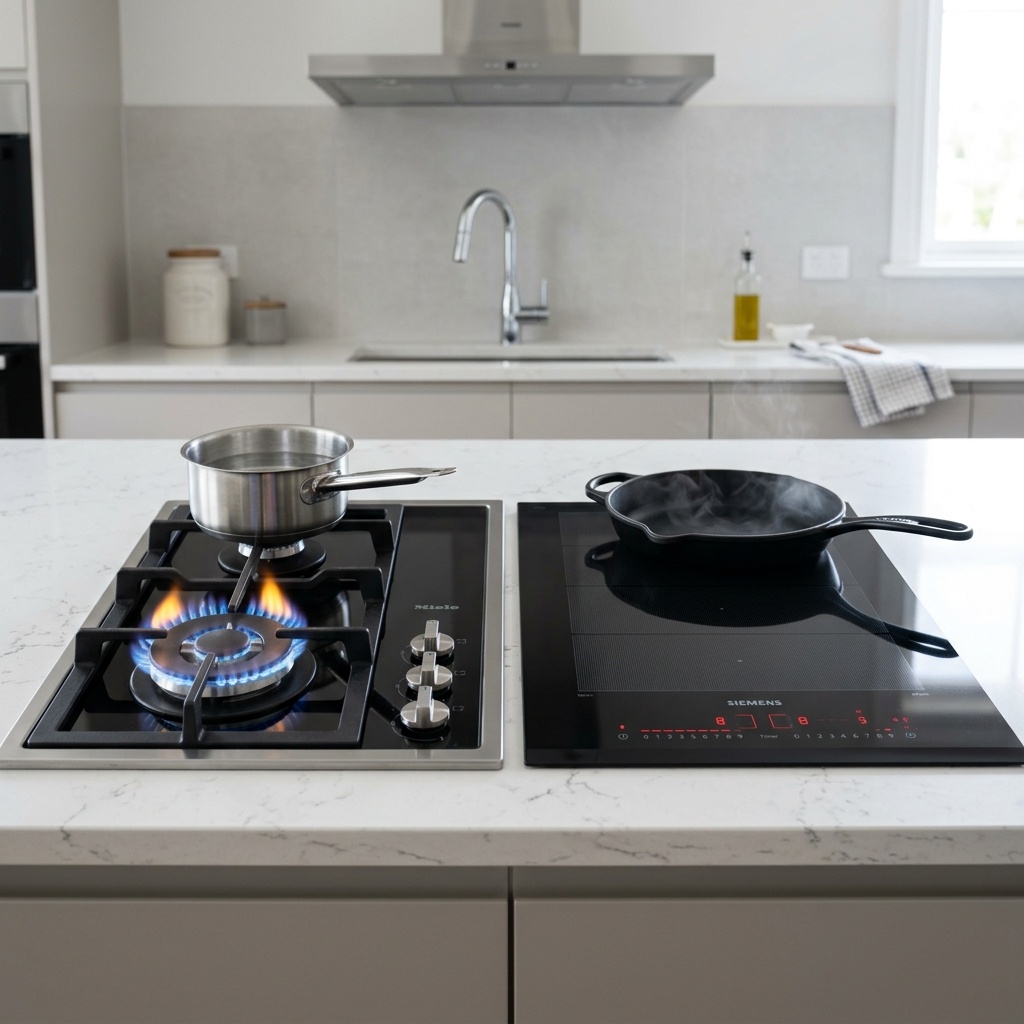
Gas vs Induction Hob for Indian Cooking
| Factor | Gas Hob | Induction Hob |
|---|---|---|
| Indian cookware compatible | Yes — all pots, pans, kadai, iron tawa | No — only flat-bottom magnetic cookware (stainless, cast iron). No copper, aluminium, clay. |
| Cooking speed | Fast — instant high heat for tadka and frying | Fast — but limited to induction-compatible vessels |
| Power cut impact | Works without electricity (manual ignition option) | Non-functional in power cut |
| Safety (gas leak risk) | Gas supply required — leak risk if connections old | No gas — safer in apartments with children |
| Energy efficiency | 40–55% | 85–90% — significantly more efficient |
| Cost (hob unit) | ₹8,000–₹25,000 | ₹10,000–₹35,000 |
| Running cost | Gas per unit (piped) or cylinder cost | Electricity per kWh — generally cheaper than cylinder gas |
| Verdict for Indian cooking | Best — compatible with all cooking styles and vessels | Good for hybrid households; requires full cookware replacement |
Frequently Asked Questions
Which hob is best for Indian cooking?
A 3-burner auto-ignition gas hob with toughened glass top is the best all-round choice for Indian families of 3–5. Gas hobs are compatible with all Indian cookware including iron kadai, copper vessels, clay pots, and large pressure cookers. Induction hobs require flat-bottom magnetic cookware and don't work in power cuts — significant limitations for daily Indian cooking. For families with piped gas supply (CNG/PNG in apartment complexes), a gas hob remains the most practical choice.
How many burners do I need for Indian cooking?
For a family of 3–5 cooking a typical Indian meal (dal, sabzi, rice, roti simultaneously): 3 burners is the minimum comfortable configuration — dal on one, sabzi on another, and rice on the third, with the roti tawa used on whichever is free. A 2-burner hob forces serial cooking (one dish at a time) which is impractical for a full Indian meal. For families of 5+ or where two people cook simultaneously: 4 burners gives significantly more flexibility.
Is glass top hob better than stainless steel for Indian kitchen?
Glass top hobs are easier to clean — the flat surface can be wiped down with a damp cloth after cooking, and there are no grates or burner caps with trapped residue. This is a genuine advantage for Indian kitchens where daily frying creates significant splatter. The risk: toughened glass cracks under sudden thermal shock (pouring cold water on a hot glass surface) or hard impact. For kitchens where heavy utensils are regularly placed on the hob surface, stainless steel is more durable. For careful users wanting easy cleaning: glass.
What is auto-ignition in a hob and is it necessary?
Auto-ignition (also called auto-spark or electric ignition) starts the burner with a single push-turn of the knob — no lighter or match needed. It is absolutely necessary for a modular kitchen hob. Lighting a built-in gas hob with a match is impractical and unsafe (the burner is recessed in the counter). All quality gas hobs come with auto-ignition; some have flame failure device (FFD) which automatically cuts gas if the flame goes out. Always specify FFD (also called flame safeguard) for safety.
What size hob fits in a standard modular kitchen?
Standard built-in gas hob sizes: 60cm × 52cm (most common — fits a standard 600mm base cabinet cutout), 75cm × 52cm (for 4+ burner models), 90cm × 52cm (for 5-burner models). The most common Indian modular kitchen hob size is 60cm — it fits the standard 600mm cabinet module width. Confirm your cabinet cutout dimensions with your designer before ordering a hob; a too-large hob cannot be installed without modifying the countertop cutout.
What is PNG hob and is it better than LPG?
PNG (Piped Natural Gas) is supplied via a pipeline directly to the kitchen — no cylinders needed. It is cheaper than LPG per unit energy and eliminates the need to order and carry cylinders. If PNG is available in your apartment complex (increasingly common in Ranchi housing societies), specify a PNG-compatible hob — the gas pressure is different from LPG, so the injectors must match. Most quality hob brands supply both LPG and PNG versions. PNG-compatible hobs are identical in appearance and function — just specify the fuel type when ordering.
Which hob brand is best in India?
In India, Kutchina, Faber, Glen, Elica, and Kaff are the most popular built-in gas hob brands. For modular kitchens sold by Ammon Marketing, Kutchina hobs are recommended — they are part of the same authorized product ecosystem as our chimneys, with matching finish options and a single service contact for both. For independent purchase: Faber and Glen offer good quality-to-cost ratio in the ₹8,000–₹18,000 range. IFB and Bosch are premium options for those wanting European brand quality.
How do I maintain a glass top gas hob?
Daily: wipe the glass surface with a dry or slightly damp cloth after cooling — don't clean while the hob is hot. Weekly: remove burner caps and grates, wash in warm water with mild detergent, dry thoroughly before replacing. Monthly: use a glass-top hob cleaner (available at kitchen stores, ₹200–₹400) to remove stubborn stains and light yellowing. Avoid: pouring cold water on hot glass (thermal shock risk), abrasive scrubbers (scratch the surface), and harsh chemical cleaners.
Key Takeaways
- 3-burner auto-ignition glass-top gas hob is the best choice for most Indian families of 3–5
- 4 burners for families of 5+ or two-cook households; 2 burners only suits couples with light cooking
- Glass top cleans more easily; SS is more durable under heavy use — both work equally well for cooking
- Induction hobs require full cookware replacement (no copper, clay, aluminium) — significant for traditional Indian cooking setups
- Always specify auto-ignition and flame failure device (FFD) — both are safety essentials, not optional upgrades
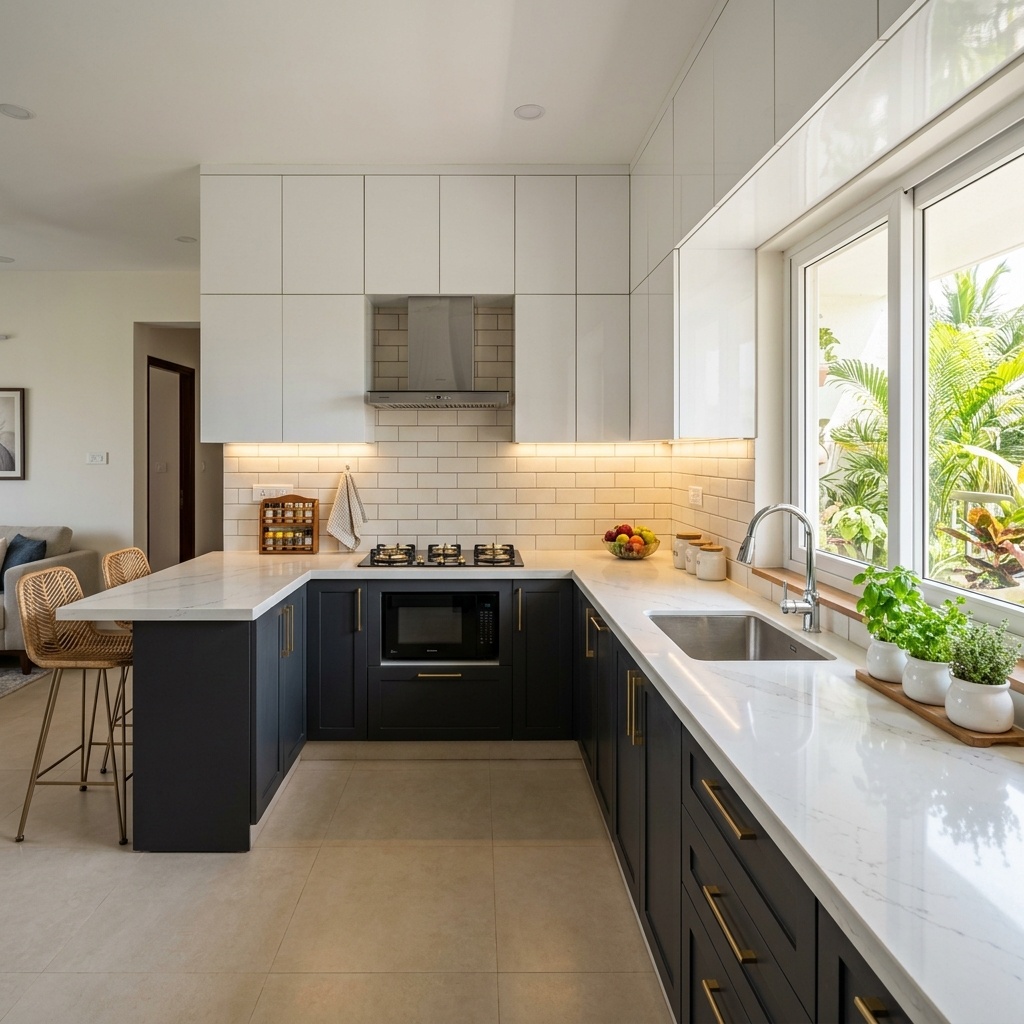
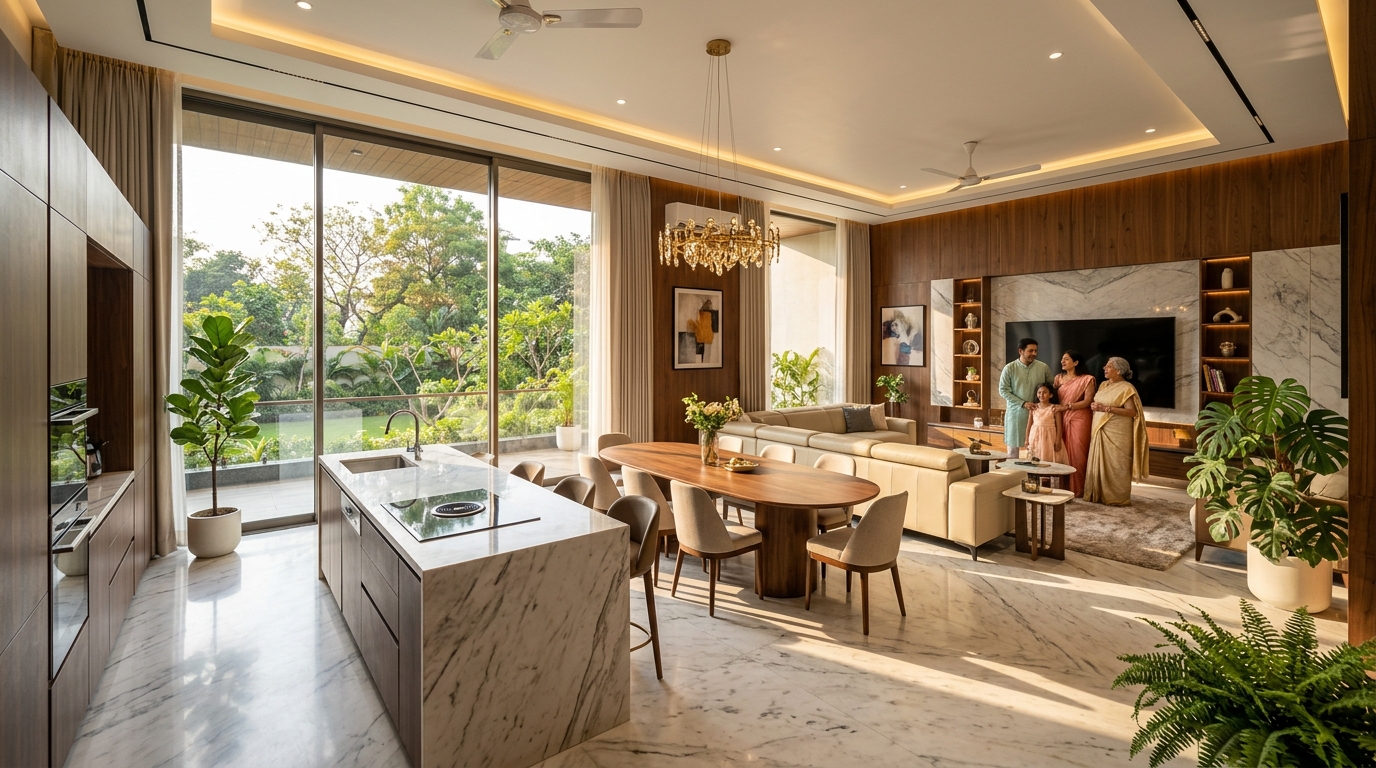
See These Ideas in Real Homes
Free · No Obligation
Talk to Our Design Experts
Ammon Marketing Editorial Team
Authorized Kutchina Dealer · Ranchi · Est. 2014
Our guides are written by Ranchi-based kitchen designers and appliance experts with 10+ years of on-the-ground experience. Every recommendation is based on real projects completed in Jharkhand homes — not generic advice from outside the region.