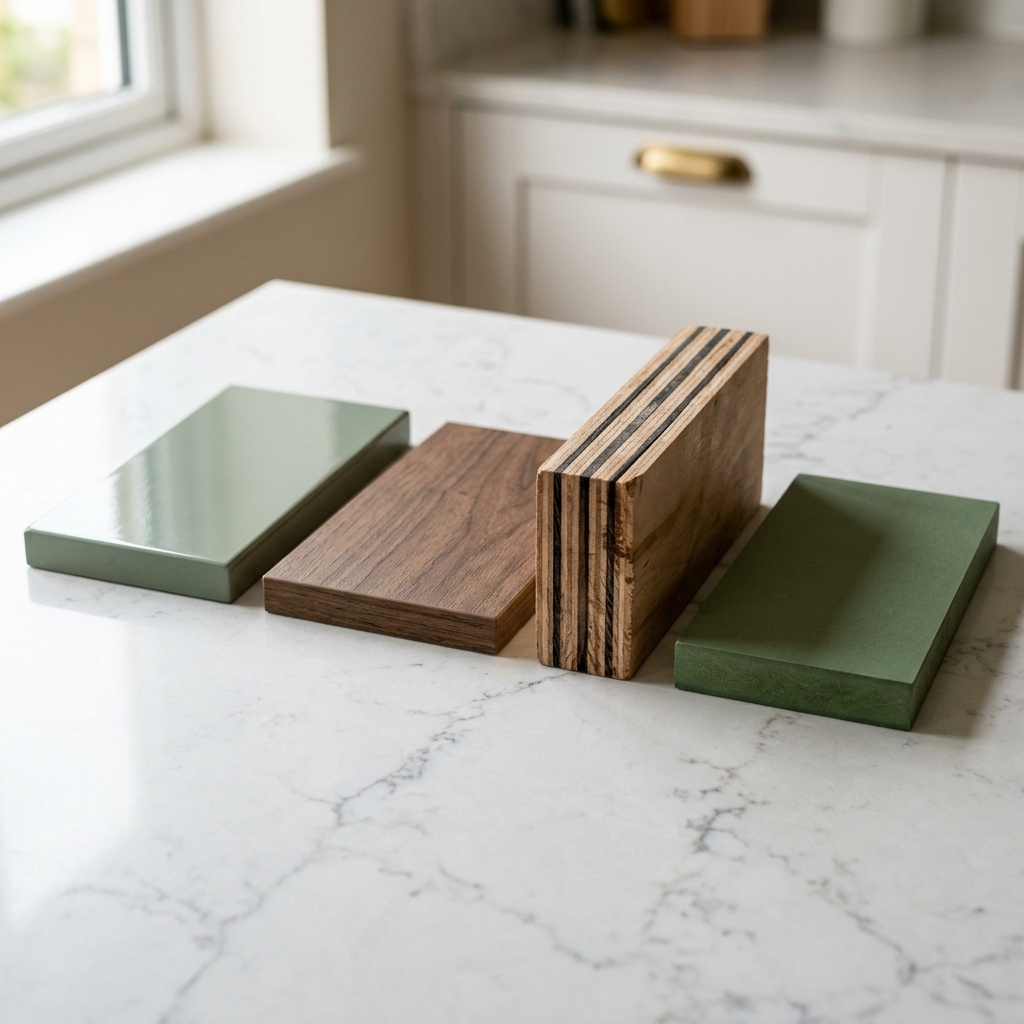
Kitchen Backsplash Design Guide: Tiles, Glass, Steel & What Works in Indian Kitchens
Ammon Marketing
Authorized Kutchina Dealer · Ranchi
02 Jul 2026
~ read
TL;DR
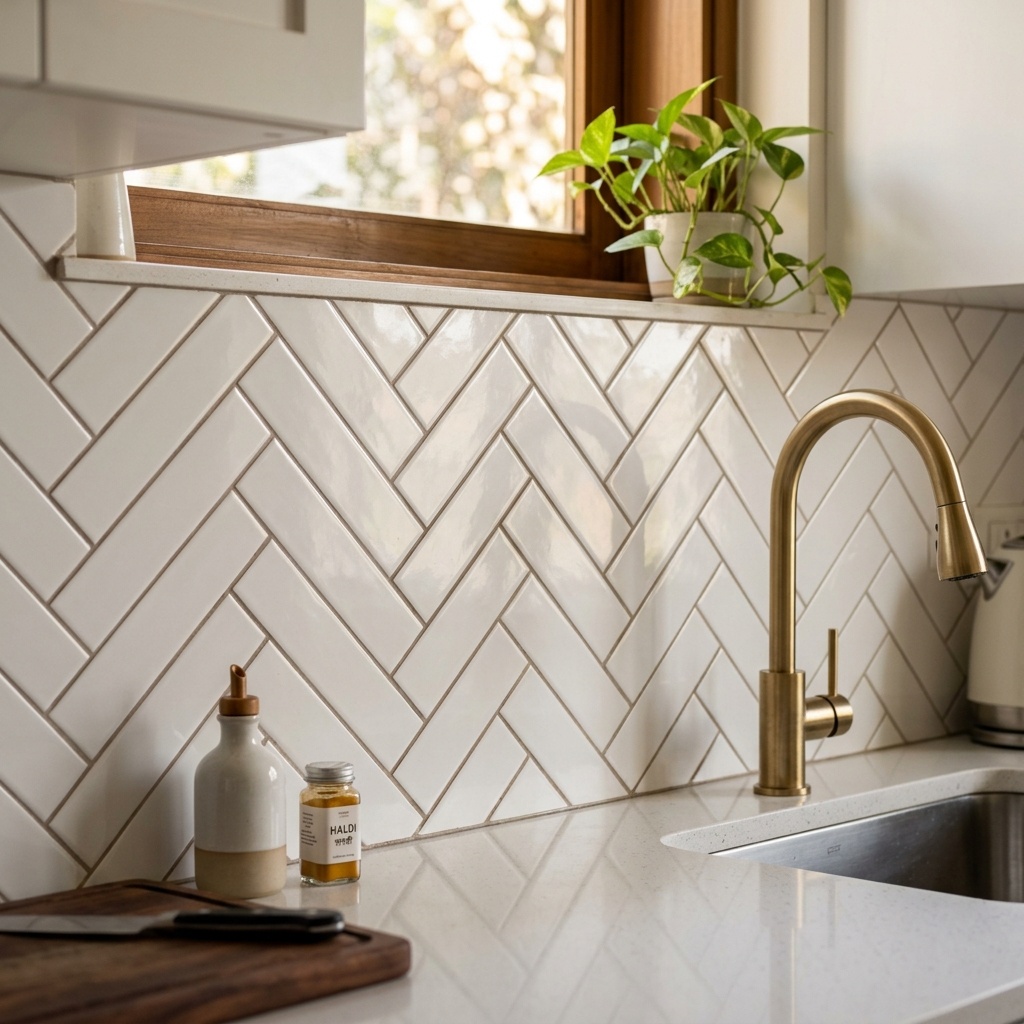
- Ceramic / vitrified tile is the best all-round backsplash for Indian kitchens — heat-safe, easy to clean, affordable, and available in thousands of designs
- Glass mosaic looks stunning but grout lines collect grease — high maintenance for daily Indian cooking
- Stainless steel is the easiest to clean near the hob and most hygienic — industrial look suits modern kitchens
- Full-height backsplash (floor to ceiling on the cooking wall) always looks more polished than a narrow strip — and protects more wall area
Quick Answer:For most Indian kitchens, large-format vitrified tiles (600×300mm or larger) are the best backsplash choice — they have minimal grout lines to collect grease, are heat-resistant, and are easy to wipe down. Behind the hob specifically, consider a stainless steel panel or ceramic tile with epoxy grout (stain-proof). Glass mosaic is best restricted to the non-cooking walls where it's decorative without the maintenance burden.
The backsplash protects your wall from heat, oil splatter, water, and cleaning chemicals — every day, for 15–20 years. The wrong material means stained grout that never comes clean, tiles that pop off from heat, or surfaces that look dirty within months. This guide tells you what actually holds up behind Indian cooking.
Backsplash Material Comparison
| Material | Heat Resistance | Grease Cleaning | Maintenance | Cost (per sq ft) | Best For |
|---|---|---|---|---|---|
| Ceramic tile (small format) | Good | Moderate — grout lines collect grease | Medium — grout needs scrubbing | ₹30–₹100 | Budget kitchens — choose epoxy grout |
| Vitrified tile (large format) | Excellent | Easy — minimal grout lines | Low | ₹60–₹250 | Best all-round choice for Indian kitchens |
| Glass mosaic | Good | Difficult — many tiny grout lines | High | ₹150–₹500+ | Feature walls away from the hob |
| Stainless steel sheet | Excellent | Very easy — wipe with cloth | Very low | ₹80–₹200 | Hob zone — most hygienic, easiest clean |
| Natural stone (marble/slate) | Good (with sealing) | Moderate — porous unless sealed | Medium — needs annual sealing | ₹100–₹400 | Dry zones or non-cooking walls |
| Mirror / reflective | Poor — heat can cause stress fractures | Easy surface, but shows everything | High — fingerprints constant | ₹150–₹350 | Decorative accent only, away from hob |
| 3D textured tile | Good | Difficult — ridges collect grease | High | ₹120–₹400 | Feature wall only, not near hob |
The Hob Zone: Treat It Differently
The 600mm directly behind and beside the hob is the most demanding zone in your kitchen. It faces direct heat, oil splatter from frying, and daily cleaning. This zone deserves a different — or better — material than the rest of the backsplash.
| Option | Why It Works | What to Watch |
|---|---|---|
| Stainless steel sheet (brushed finish) | Heat-proof, wipe-clean in seconds, fully hygienic | Fingerprints show on polished finish — use brushed (matte) SS |
| Large-format vitrified tile with epoxy grout | Heat-safe, minimal grout lines, epoxy grout won't stain | Choose tiles that match rest of backsplash for a seamless look |
| Toughened glass panel (back-painted) | Seamless — zero grout lines, heat-resistant, very easy clean | Professional installation required; harder to repair if cracked |
Standard vs Full-Height Backsplash
The backsplash height decision affects both function and aesthetics more than most people realise.
| Height Option | Coverage | Look | Cost Impact |
|---|---|---|---|
| Standard strip (450–600mm above counter) | Covers counter-to-wall-cabinet gap only | Traditional, most common | Lowest |
| Extended (to underside of wall cabinet) | Full gap coverage, slightly taller strip | Clean, modern | Low |
| Full-height (counter to ceiling on cooking wall) | Maximum protection, covers behind wall cabinets too | Premium, built-in look | Medium (more material + labour) |
| Floor-to-ceiling feature wall | Entire cooking wall — dramatic statement | Very premium, showroom look | Higher |
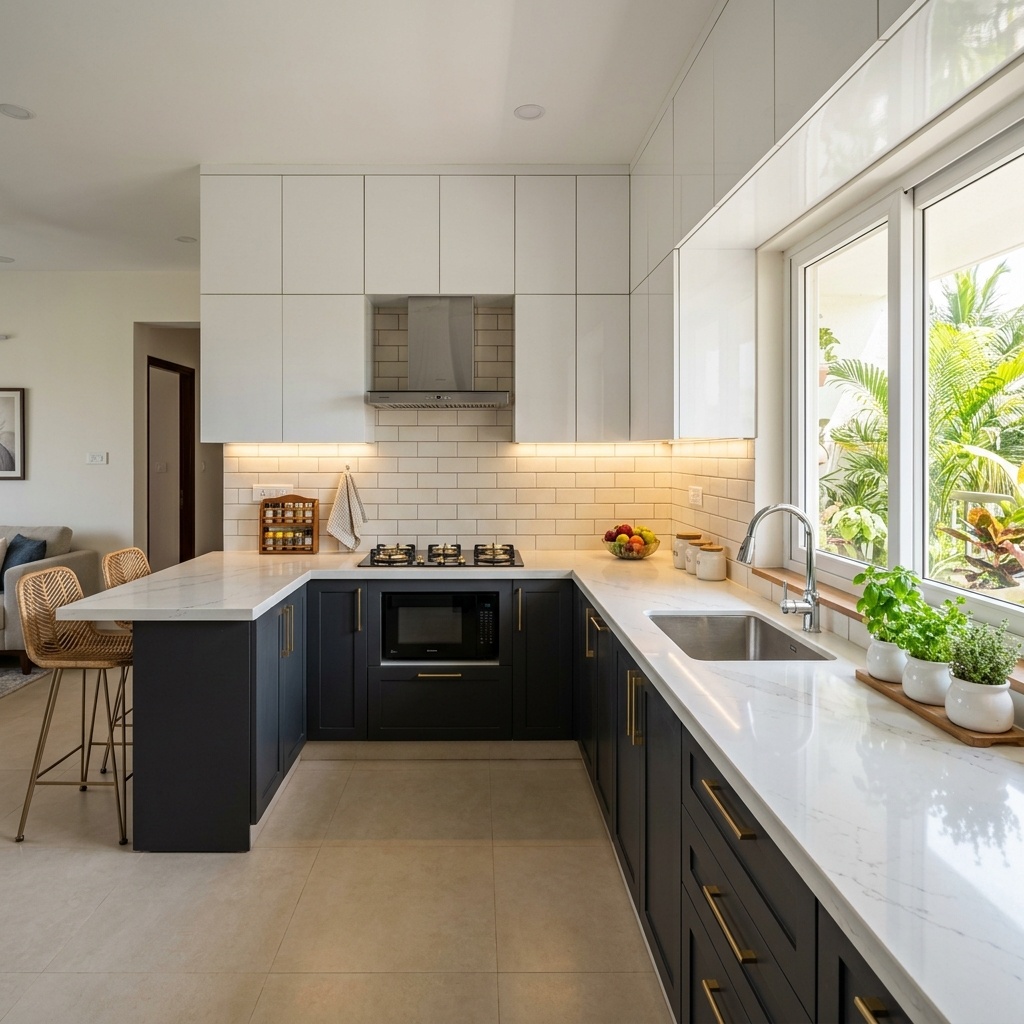
Recommendation: Full-height backsplash on the cooking wall costs only 20–30% more than a standard strip (same material, just more of it) but looks dramatically better and protects more wall. If you're already investing in a quality kitchen, this is one of the best value upgrades available.
Grout: The Most Important Backsplash Decision After Material
In Indian kitchens, grout is the backsplash maintenance problem. Standard cement grout absorbs oil, turmeric, and food residue — it turns yellow-brown within 12–18 months regardless of cleaning frequency.
| Grout Type | Stain Resistance | Cost Premium | Recommendation |
|---|---|---|---|
| Standard cement grout | Poor — absorbs oil and turmeric | Base (1x) | Avoid in kitchen backsplash |
| Polymer-modified cement grout | Moderate | +10–15% | Acceptable for low-cooking zones |
| Epoxy grout | Excellent — non-porous, stain-proof | +30–50% | Always specify for kitchen backsplash |
| Grout-free options (large tiles, SS sheet, glass) | No grout = no problem | Varies | Best choice where aesthetics allow |
Frequently Asked Questions
Which is the best backsplash tile for Indian kitchen?
Large-format vitrified tiles (600×300mm or larger) with epoxy grout are the best backsplash choice for Indian kitchens. They have minimal grout lines to accumulate grease, are heat-resistant, easy to wipe clean, and available in a wide range of designs. For the hob zone specifically, consider a stainless steel sheet or toughened glass panel for zero grout lines and maximum hygiene.
Which backsplash is easiest to clean in Indian kitchen?
Stainless steel sheet (brushed finish) is the easiest to clean — wipe with a damp cloth and oil residue comes off completely. Second easiest: toughened back-painted glass (no grout lines). Third: large-format vitrified tile with epoxy grout. Most difficult to maintain: glass mosaic (hundreds of tiny grout lines) and 3D textured tiles (ridges trap grease).
How high should kitchen backsplash be?
Minimum: the gap between countertop and wall cabinet (typically 450–600mm). Standard practice: cover the full gap with tile. Best result: full-height on the cooking wall (counter to ceiling) using the same tile — adds only 20–30% more cost in material and labour but dramatically improves the look and protects more wall area from cooking splatter.
What size tile is best for kitchen backsplash?
Larger tiles are better for kitchens — 600×300mm, 600×600mm, or even larger format tiles have fewer grout lines per sq ft, which means less grease trapping. Small mosaic tiles (less than 100mm) look beautiful but have very high grout line density — extremely difficult to keep clean with Indian cooking.
Can I use glass mosaic tiles behind the hob?
Not recommended for the hob zone. Glass mosaic tiles behind the hob have hundreds of tiny grout lines that collect oil and grease from daily frying — these lines turn brown and are almost impossible to clean thoroughly. The individual tiles can also micro-crack from sustained direct heat exposure. Use glass mosaic as a feature on non-cooking walls instead.
What is epoxy grout and why should I use it in kitchen?
Epoxy grout is a two-part resin-based grout (vs standard cement grout) that creates a non-porous, chemically resistant joint. It doesn't absorb oil, water, or food stains — stays clean with simple wiping. Standard cement grout absorbs cooking residue and turns brown-yellow within 1–2 years in Indian kitchens regardless of how carefully you clean. The 30–50% cost premium for epoxy grout is always worth it for kitchen backsplash.
How much does kitchen backsplash cost in India?
Backsplash cost depends on material and area. For a standard strip (450mm height × 10 running feet): ceramic tile + labour = ₹4,000–₹12,000; vitrified tile = ₹8,000–₹20,000; stainless steel sheet = ₹6,000–₹15,000; glass mosaic = ₹15,000–₹40,000+. Full-height backsplash on the cooking wall roughly doubles the material quantity (but not the labour) vs a standard strip.
Should backsplash be done before or after modular kitchen installation?
Backsplash tiling should be done before the modular kitchen base cabinets are installed, but after wall plumbing and electrical rough-in is complete. The wall tile contractor needs clear wall access without cabinets in the way. The modular kitchen installer then fits cabinets against the completed tiled wall. If done in wrong order, cutting tiles around existing cabinets is far more difficult and the result looks less clean.
Key Takeaways
- Large-format vitrified tile with epoxy grout is the best backsplash for Indian kitchens — heat-safe, minimal grout lines, easy maintenance
- The hob zone deserves special treatment: stainless steel sheet or toughened glass gives zero grout lines and maximum hygiene
- Always specify epoxy grout for kitchen backsplash — standard cement grout stains permanently from Indian cooking within 12–18 months
- Full-height backsplash on the cooking wall costs only 20–30% more in material but looks dramatically better and gives better wall protection
- Backsplash tiling should be completed before modular kitchen installation begins — not after
See These Ideas in Real Homes
Free · No Obligation
Talk to Our Design Experts
Ammon Marketing Editorial Team
Authorized Kutchina Dealer · Ranchi · Est. 2014
Our guides are written by Ranchi-based kitchen designers and appliance experts with 10+ years of on-the-ground experience. Every recommendation is based on real projects completed in Jharkhand homes — not generic advice from outside the region.