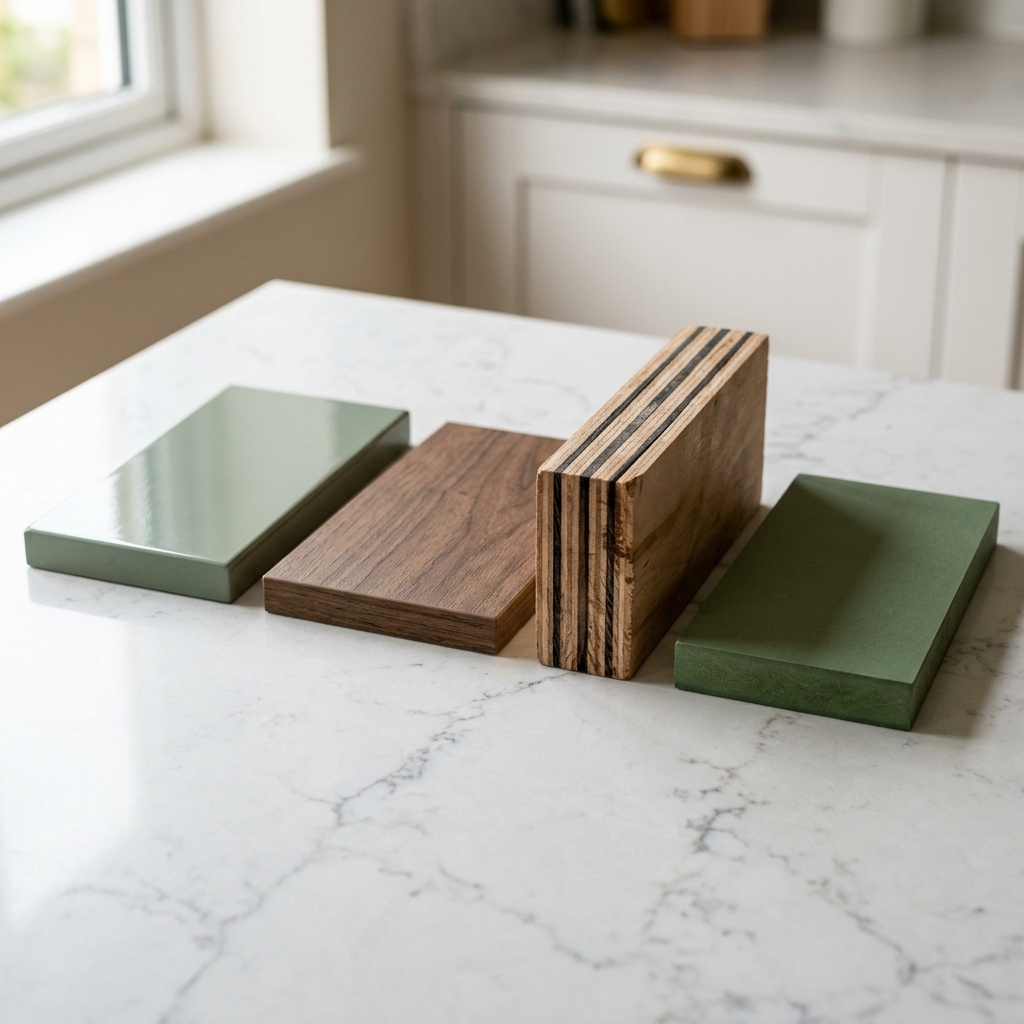
Kitchen Floor Tiles Guide India: Anti-Slip Ratings, Materials & What to Avoid
Ammon Marketing
Authorized Kutchina Dealer · Ranchi
02 Jul 2026
~ read
TL;DR
- Anti-slip vitrified tiles (R10 or R11 rating) are the best kitchen floor choice for Indian homes — durable, easy to clean, safe when wet
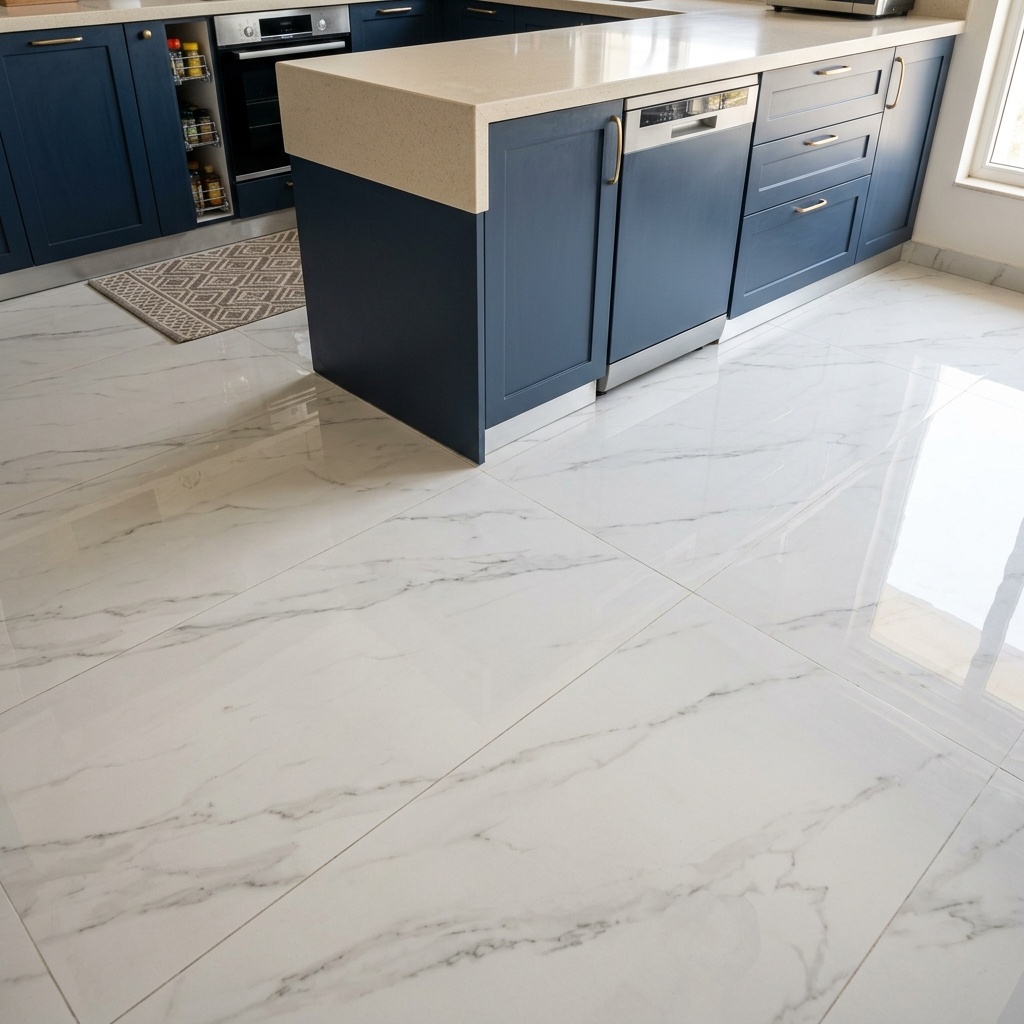
- Polished marble and high-gloss vitrified tiles look stunning but are dangerously slippery when wet near sink and hob — avoid for kitchen floors
- Minimum tile size recommended: 600×600mm — smaller tiles mean more grout lines that collect grease and are harder to clean
- Dark tile colour near the hob hides oil splatter; light tile elsewhere makes the space feel larger — a two-zone approach works well
Quick Answer: For Indian kitchen floors, choose matte or satin-finish vitrified tiles with R10 anti-slip rating (R11 for high-water-use kitchens), size 600×600mm or 800×800mm. Avoid polished marble, high-gloss vitrified, and small mosaic tiles — these are either slippery, grout-heavy, or high-maintenance. Budget ₹45–₹120 per sq ft for tile plus ₹25–₹40 per sq ft for laying.
Kitchen Flooring Materials Compared
| Material | Anti-Slip | Durability | Maintenance | Cost (per sq ft) | Verdict |
|---|---|---|---|---|---|
| Matte vitrified tiles | Excellent (R10–R11) | Excellent | Easy — mop clean | ₹50–₹120 | Best overall for Indian kitchens |
| Satin/matt ceramic tiles | Good (R9–R10) | Good | Easy | ₹30–₹80 | Good budget option |
| Polished vitrified (glossy) | Poor — very slippery when wet | Excellent | Shows every footprint | ₹55–₹150 | Avoid for kitchens — beautiful but dangerous |
| Polished marble | Poor | Good (scratches over time) | High — stains easily with masala/oil | ₹80–₹250+ | Avoid — slippery and stains with Indian cooking |
| Textured/anti-skid ceramic | Excellent | Good | Moderate — texture traps grease | ₹30–₹70 | Good for high-wet zones (near sink) |
| Vinyl / LVT flooring | Good | Moderate (3–8 years) | Easy — mop | ₹40–₹100 | Good for small kitchens; not ideal with heavy vessels |
| Kota stone (natural) | Good | Excellent | Low maintenance | ₹30–₹60 | Practical traditional choice; less aesthetic |
| Wooden / laminate flooring | Poor in wet conditions | Poor in kitchen | High — water damage risk | ₹80–₹200 | Avoid in kitchens — swells with moisture |
Understanding Anti-Slip Ratings (R-Value)
| R-Rating | Slip Resistance | Suitable For |
|---|---|---|
| R9 | Low — minimal texture | Dry areas only — hallways, bedrooms |
| R10 | Medium — good for wet areas | Kitchen floor general area — minimum recommended for kitchens |
| R11 | High — significant texture | Near sink, hob, and high-splash zones in kitchen |
| R12 | Very high — industrial texture | Commercial kitchens; too rough for residential cleaning |
Always ask the tile supplier for the R-rating before purchasing. If they cannot provide it, the tile likely has no certified rating — treat as R9 and avoid for kitchen use.
Tile Size: Why Bigger Is Better for Kitchens
- 600×600mm or 800×800mm — recommended for kitchen floors. Fewer grout lines means less grease accumulation and easier cleaning
- 300×300mm or smaller — more grout lines that collect oil, masala, and moisture. Cleaning becomes significantly harder in Indian cooking conditions
- Mosaic tiles (small format) — maximum grout surface — avoid completely for kitchen floor in Indian homes
In a 3×3m kitchen with 300×300 tiles: approximately 100 tiles = 180m of grout lines to clean. The same floor in 800×800 tiles: approximately 15 tiles = 30m of grout lines. 6x less grout to maintain.
Frequently Asked Questions
Which tiles are best for kitchen floor in India?
Matte or satin-finish vitrified tiles with R10 anti-slip rating, size 600×600mm or larger, are the best kitchen floor tiles for Indian homes. They resist oil and masala staining, clean easily with a mop, provide safe grip when wet from cooking spills or washing, and are available in a wide range of colours and designs. Avoid polished/glossy vitrified and marble — both become dangerously slippery when wet with oil or water.
Are glossy tiles slippery in kitchen?
Yes — high-gloss polished tiles (vitrified or marble) are significantly slippery when wet, which in an Indian kitchen happens constantly from cooking spills, washing, and steam. A polished surface offers minimal friction when wet — the same property that makes it look mirror-bright makes it unsafe. Even a thin film of oil or water on polished tiles creates slip risk. For kitchen floors, always choose matte or satin finish.
What is the best tile size for kitchen floor?
600×600mm is the minimum recommended size for Indian kitchen floors; 800×800mm is even better. Larger tiles mean fewer grout lines — and grout lines in Indian kitchens collect oil, masala residue, and moisture rapidly. Smaller tiles (300×300mm and below) look neat but require far more grout cleaning effort. A 3×3m kitchen in 800×800 tiles has 6x fewer grout lines than the same floor in 300×300 tiles.
Can I use the same tiles for kitchen floor and wall?
Technically yes, but it is not recommended. Kitchen wall tiles can be glossy (the wall doesn't have slip risk) and are typically 300×450mm or 300×600mm. Kitchen floor tiles should be matte/satin with R10 anti-slip rating, typically 600×600mm+. Using the same tile on both surfaces often means compromising one — either putting a slippery tile on the floor or an unnecessarily rough tile on the wall. Coordinate colours but use different products.
How much does kitchen floor tiling cost in India?
Kitchen floor tiling cost in India (2026): tile material ₹45–₹120 per sq ft depending on brand and size; laying (labour + cement + adhesive) ₹25–₹40 per sq ft. For a standard 80–100 sq ft kitchen floor, total tiling cost is approximately ₹7,000–₹16,000 for basic to mid-range vitrified tiles including labour. Premium imported tiles or large-format tiles (1200×1200mm) cost significantly more — ₹150–₹400 per sq ft for material alone.
Is vinyl flooring good for Indian kitchen?
Vinyl / LVT (Luxury Vinyl Tile) flooring is a reasonable choice for Indian kitchens with light-to-moderate cooking. It is softer underfoot than ceramic, reasonably water-resistant, and easy to install. Limitations: it is not as durable as vitrified tile under heavy Indian cooking conditions (high heat, oil spills, heavy vessel dropping), and most vinyl products have a 5–8 year kitchen lifespan vs 15–20 years for quality vitrified. It is a better fit for small kitchens or rented homes where you want an upgrade without civil work.
What colour kitchen floor tiles suit Indian homes?
For Indian cooking conditions, mid-tone colours (warm grey, beige, light terracotta, stone tones) are the most practical — they hide everyday dust and light staining better than very light tiles, while showing less than very dark tiles which show every water drop and footprint. Near the hob, slightly darker tiles (charcoal grey, dark beige) hide oil splatter better. A two-tone approach — slightly darker near the hob and sink, lighter elsewhere — is a practical strategy for Indian kitchens.
Should kitchen floor and countertop tiles match?
They don't need to match exactly but should coordinate. A practical approach: use the same colour family with different tones — for example, a warm grey floor with a slightly lighter warm grey backsplash creates cohesion without being identical. The countertop (granite or quartz) is a third surface — the floor and backsplash should complement the countertop rather than compete with it. Stick to 2–3 materials and colours total for a clean, coordinated look.
Key Takeaways
- Matte vitrified tiles R10+ in 600×600mm or larger are the best kitchen floor choice for Indian homes
- Polished marble and high-gloss vitrified are beautiful but slippery when wet — never use on kitchen floors
- Bigger tile = fewer grout lines = easier cleaning in Indian cooking conditions
- Always ask for the R-rating before buying kitchen floor tiles — no rating means treat it as R9 (avoid)
- Total kitchen floor tiling cost: ₹7,000–₹16,000 for a standard 80–100 sq ft kitchen including labour
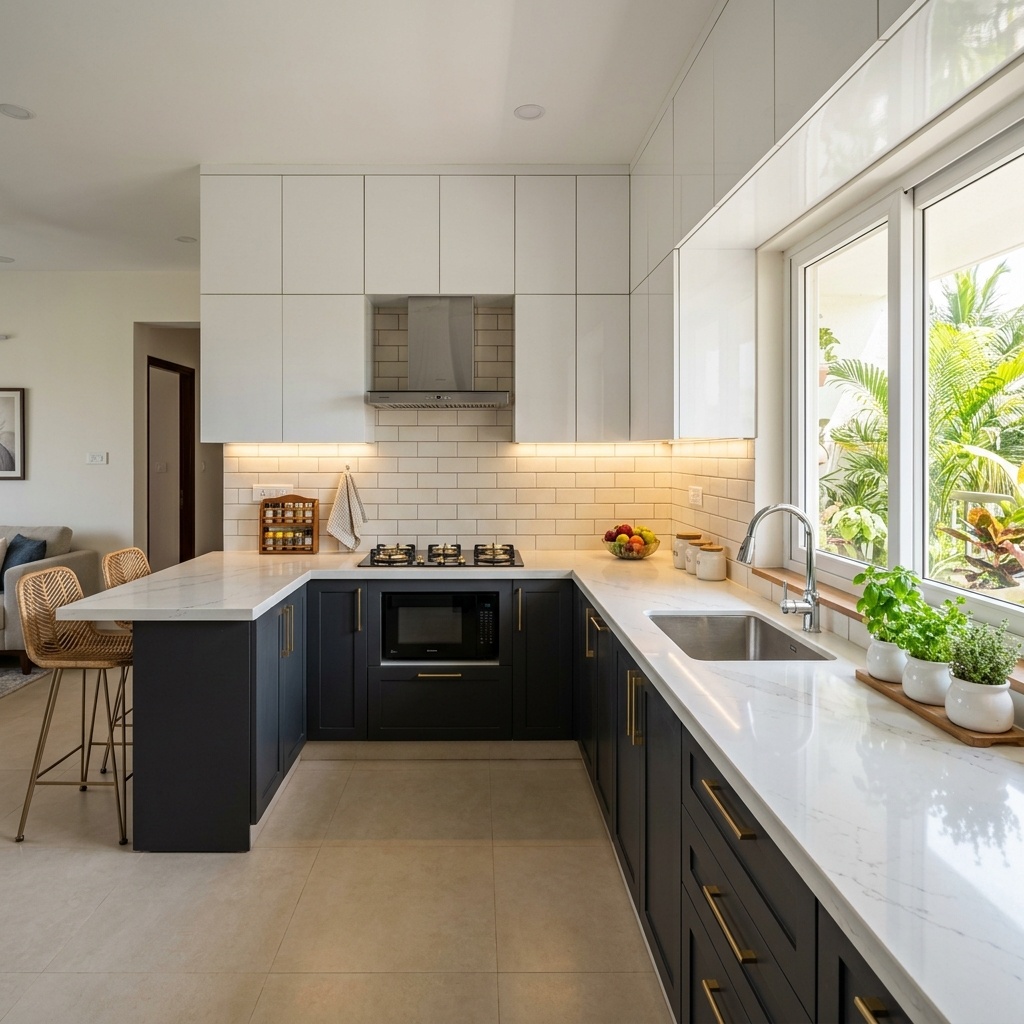
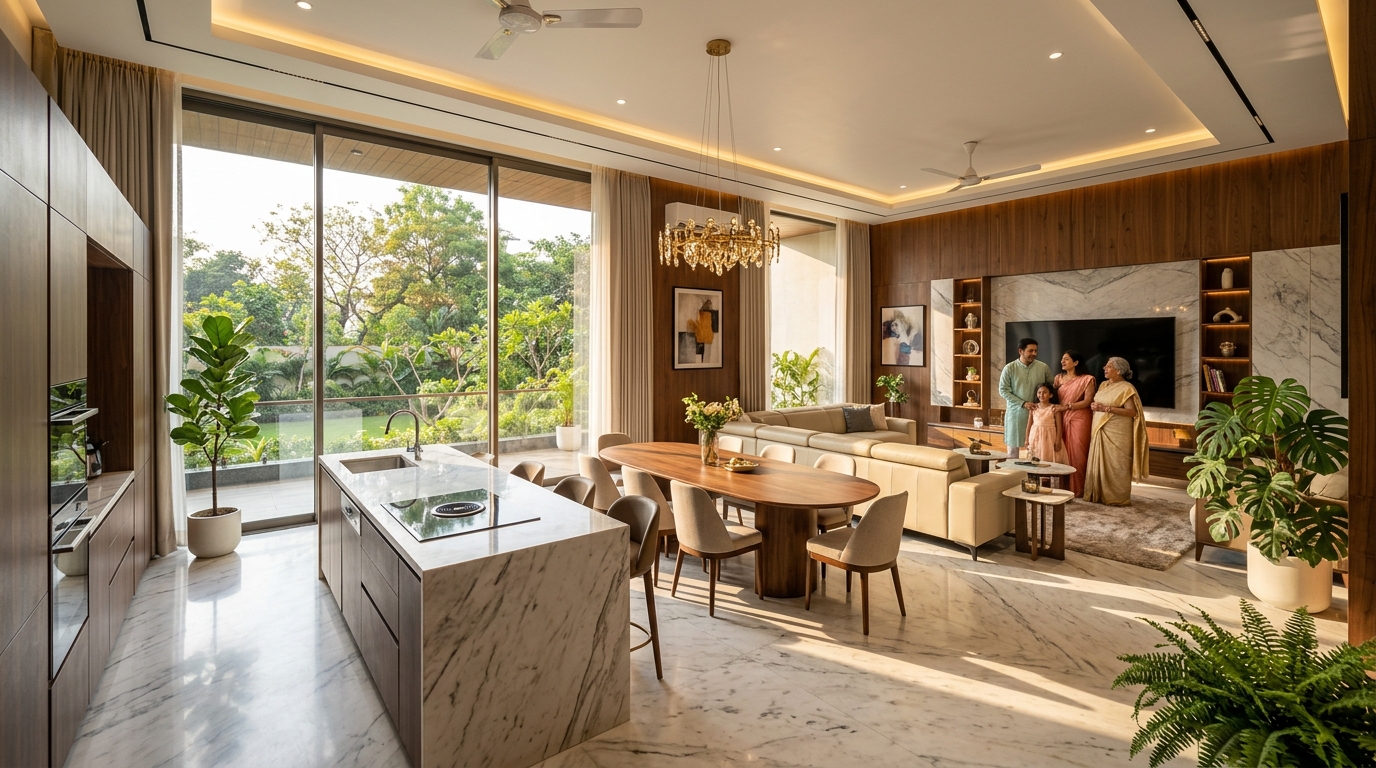
See These Ideas in Real Homes

Free · No Obligation
Talk to Our Design Experts
Ammon Marketing Editorial Team
Authorized Kutchina Dealer · Ranchi · Est. 2014
Our guides are written by Ranchi-based kitchen designers and appliance experts with 10+ years of on-the-ground experience. Every recommendation is based on real projects completed in Jharkhand homes — not generic advice from outside the region.