Kitchen Island Designs for Indian Homes: Types, Cost & Space Requirements
Ammon Marketing
Authorized Kutchina Dealer · Ranchi
02 Jul 2026
~ read
TL;DR
- A kitchen island needs a minimum 12×14 ft kitchen and 1.2m (4 ft) clearance on all sides — most Indian kitchens don't qualify
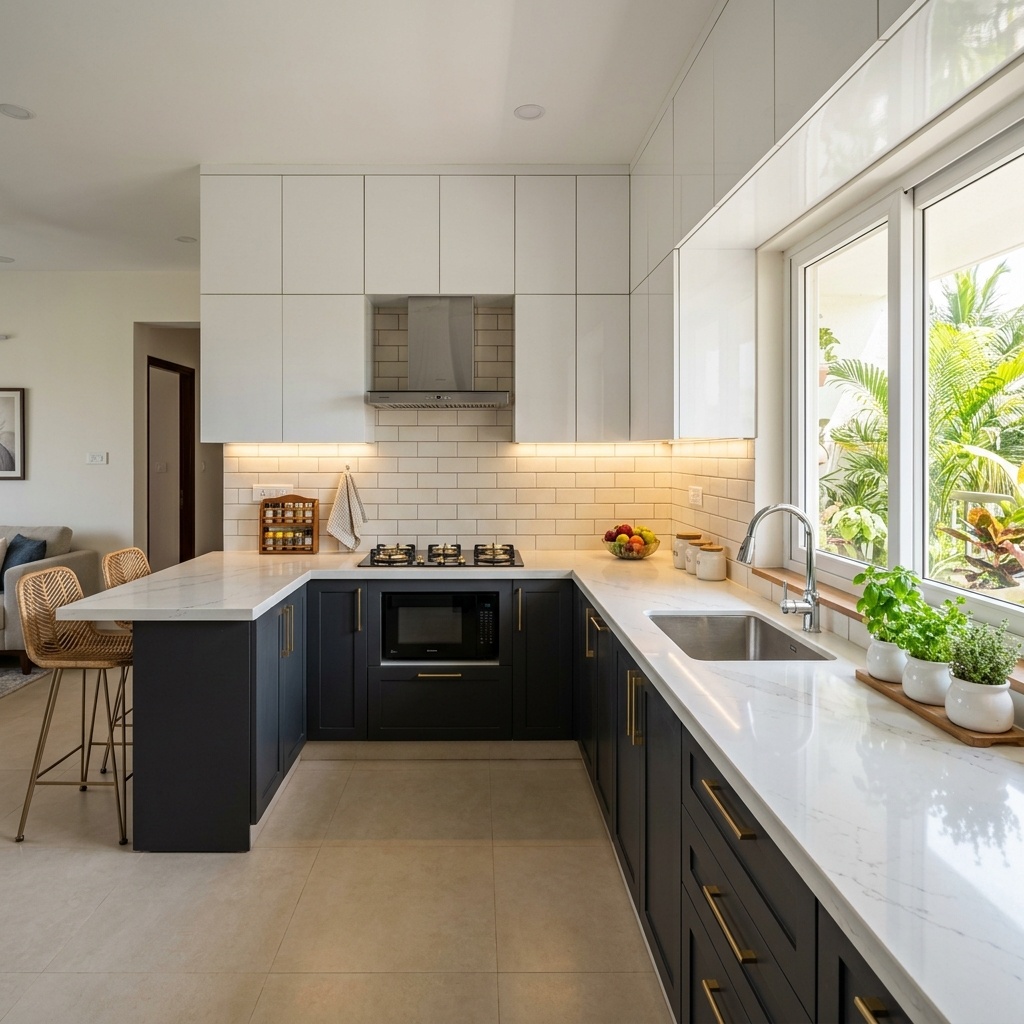
- A peninsula (island attached to one wall) needs less space — 10×12 ft minimum — and is often the better choice for Indian homes
- Islands add 40–60% to the kitchen project cost and require careful chimney planning if you put a hob on the island
- A rolling kitchen cart (moveable island) is the practical solution for smaller kitchens wanting some island functionality
Quick Answer: A kitchen island is only practical in Indian homes with a kitchen space of at least 12×14 ft (168 sq ft). Smaller spaces should consider a peninsula (semi-island attached to one wall) or a rolling kitchen cart instead. Islands look spectacular in showrooms but require significant space clearance — cramping a kitchen with a too-large island creates worse workflow than having no island at all.
Island Types Compared
| Island Type | Min Kitchen Size | Clearance Required | Cost Addition | Best For |
|---|---|---|---|---|
| Fixed island (freestanding central unit) | 12×14 ft (168 sq ft) | 1.2m (4 ft) all sides | +40–60% over base kitchen | Large open-plan kitchens, entertaining households |
| Peninsula (attached to one wall) | 10×12 ft (120 sq ft) | 1.2m (4 ft) on 3 open sides | +20–35% over base kitchen | Medium kitchens wanting island function with less space |
| Rolling / moveable kitchen cart | 8×10 ft or larger | Flexible — can move it away | ₹8,000–₹35,000 standalone | Most Indian kitchens wanting occasional island use |
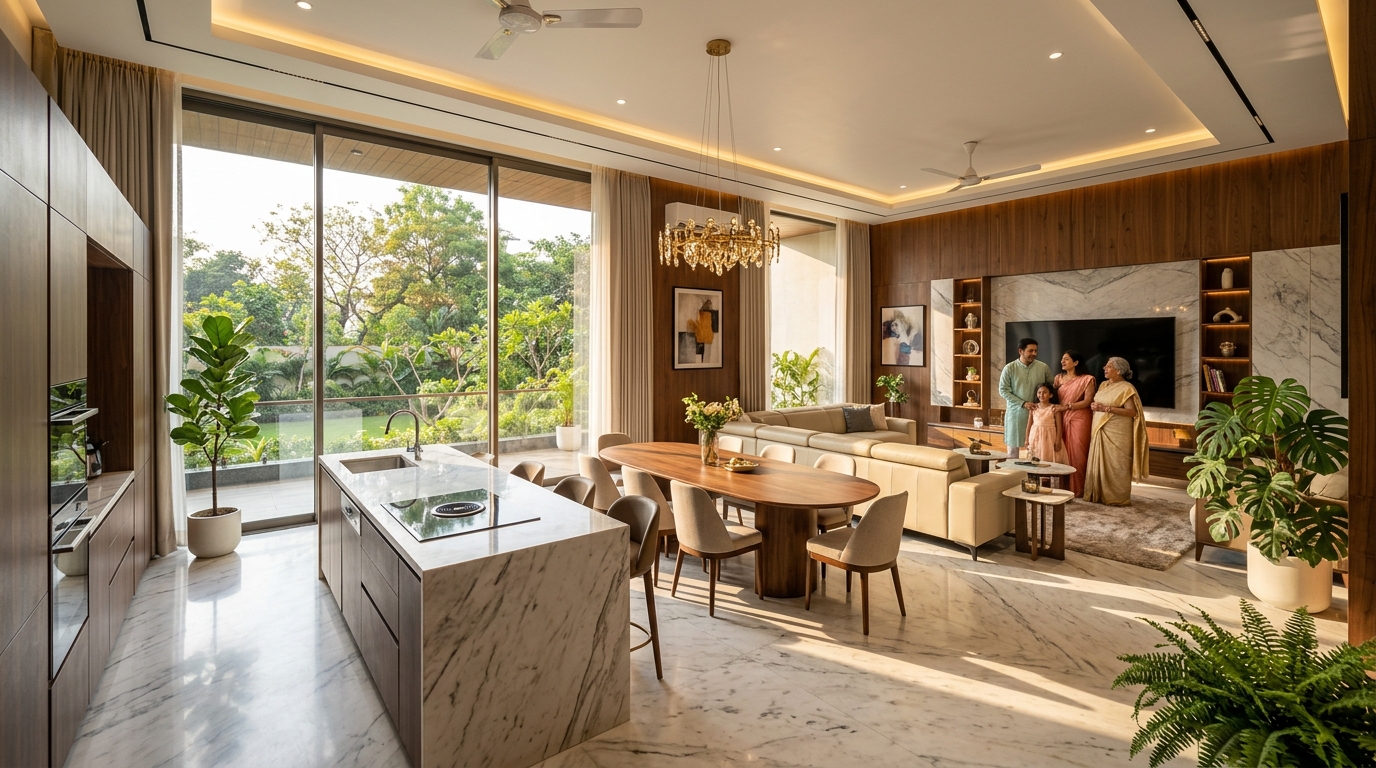
| Waterfall island (countertop down one/both ends) | 12×14 ft minimum | 1.2m all sides + visual space for effect | +50–80% over base kitchen | Premium design-forward open-plan homes |
The 1.2m Clearance Rule — Why It Matters
For an island to improve kitchen workflow (rather than obstruct it), all pathways around it need 1.2m (about 4 ft) of clear aisle. This is the minimum comfortable width for:
- One person passing behind another who is working at the island
- Pulling out a lower oven or dishwasher drawer fully while standing at the island
- A comfortable cooking lane around the island without constant body contact with the cabinetry
If your clearance would be 90cm (3 ft) or less, don't install a fixed island — the kitchen will feel more cramped than before. A peninsula (attached to one wall) reduces the number of clearance sides from 4 to 3, making it more feasible in tighter spaces.
Island Hob: The Most Complex Option
Some homeowners want to place the hob on the island for a dramatic cooking-in-view setup. This requires:
- Island chimney (ceiling-mounted): A chimney hung from the ceiling directly above the island hob. These are significantly more expensive than wall-mount chimneys (₹25,000–₹80,000 vs ₹8,000–₹25,000 for wall mount)
- Gas pipe routing: Running a gas line to the centre of the kitchen floor requires a floor chase — civil work before kitchen installation
- Electrical routing: If induction hob on island, a 15A conduit must run through the floor
An island hob adds significant complexity and cost. Most Indian kitchen islands work better as prep/dining islands — without a hob — positioned alongside a wall-mounted cooking setup. This avoids the chimney routing challenge entirely.
Frequently Asked Questions
What size kitchen do I need for an island?
Minimum 12×14 ft (168 sq ft) for a fixed kitchen island. This allows a standard island of 2×3 ft to 3×4 ft with 1.2m clearance on all four sides. For a peninsula (island attached to one wall), the minimum reduces to 10×12 ft. Below these dimensions, a rolling kitchen cart is the most practical alternative — it gives some island functionality without consuming permanent floor space.
How much does a kitchen island cost in India?
A fixed kitchen island adds 40–60% to the base kitchen project cost. For a ₹3 lakh kitchen, adding an island typically increases the total to ₹4.2–₹4.8 lakh. The island itself (a standalone unit: cabinets + countertop + finishing) costs ₹80,000–₹2,50,000 depending on size, material, and whether a hob is included. A peninsula costs slightly less (₹50,000–₹1,50,000) because one side is attached to the existing kitchen.
What is the difference between a kitchen island and a peninsula?
A kitchen island is a freestanding unit in the centre of the kitchen with access on all four sides. A peninsula is attached to the kitchen on one end — accessible on three sides only. A peninsula needs less clearance space (only 3 open sides instead of 4) and works in smaller kitchens (10×12 ft vs 12×14 ft). In Indian homes where island clearance is often tight, a peninsula is frequently the more practical choice.
Can I add a hob to a kitchen island?
Yes, but it adds significant complexity: a ceiling-mounted island chimney is needed (₹25,000–₹80,000 more than wall-mount), and gas or electrical supply must be routed through the floor (civil work). Most Indian kitchen designers recommend against a hob-on-island for practical kitchens — the chimney cost and gas routing complexity rarely justify the aesthetic gain over a wall-mounted hob setup. An island without a hob (used for prep and dining) is far simpler and equally effective for the social cooking experience.
What is a waterfall kitchen island?
A waterfall island has the countertop material extending vertically down one or both short ends of the island, creating a waterfall effect where the countertop appears to flow from the horizontal surface to the floor. Popular with quartz and marble countertops which show the most dramatic effect. Waterfall islands need 12×14 ft minimum and add 50–80% to the kitchen cost. They are a premium aesthetic choice for large, design-forward kitchens.
What should I put in a kitchen island?
Island storage options (base): drawers (most useful — fully accessible from the island walkway), base cabinet with doors (for large vessels or appliances), integrated wine rack, or built-in seating knee recess on the dining side. Island top uses: prep surface (chopping, rolling), informal dining/breakfast bar with bar stools (if island height is 90–100cm), appliance landing zone. Avoid: putting all your primary storage in the island — your kitchen walls do storage more efficiently.
Is a rolling kitchen cart a good alternative to an island?
A rolling kitchen cart is the best practical alternative for Indian kitchens under 120 sq ft. Benefits: adds counter and storage space immediately, costs ₹8,000–₹30,000 vs ₹80,000+ for a fixed island, can be moved to the dining area for serving, can be rolled away when not needed. Limitations: smaller work surface than a fixed island, doesn't have plumbing or electrical, not as structurally rigid. For kitchens where a permanent island isn't feasible, a well-chosen rolling cart gives 70% of the benefit at 10% of the cost.
Can I install a kitchen island in a modular kitchen?
Yes — a modular kitchen island is a freestanding cabinet unit (or set of units) placed in the centre of the kitchen. It uses the same materials and finishes as your wall and base cabinets for a cohesive look. The island countertop can be a different material from the main kitchen countertop (e.g., marble island top with granite main counter). Your modular kitchen designer will include the island in the 3D design — always check clearance dimensions in the 3D design before confirming.
Key Takeaways
- Fixed island: minimum 12×14 ft with 1.2m clearance on all sides — most Indian kitchens don't meet this requirement
- Peninsula is the better choice for 10×12 ft kitchens — same function, less clearance required
- Rolling kitchen cart delivers 70% of island benefit at 10% of the cost for smaller kitchens
- Avoid placing a hob on the island unless you have budget for a ceiling-mounted island chimney (₹25,000–₹80,000) and floor gas/electrical routing
- Verify island clearance in your 3D design before confirming — a badly proportioned island worsens kitchen workflow
See These Ideas in Real Homes

Free · No Obligation
Talk to Our Design Experts
Ammon Marketing Editorial Team
Authorized Kutchina Dealer · Ranchi · Est. 2014
Our guides are written by Ranchi-based kitchen designers and appliance experts with 10+ years of on-the-ground experience. Every recommendation is based on real projects completed in Jharkhand homes — not generic advice from outside the region.