Modular Wardrobe Design Guide: Walk-In vs Sliding vs Hinged, Sizes & Internal Layouts
Ammon Marketing
Authorized Kutchina Dealer · Ranchi
02 Jul 2026
~ read
TL;DR
- Sliding wardrobes are best for bedrooms under 10 ft wide — they don't need swing clearance and look sleek
- Hinged door wardrobes give full-width access in one view — better for large wardrobes with complex internal layouts
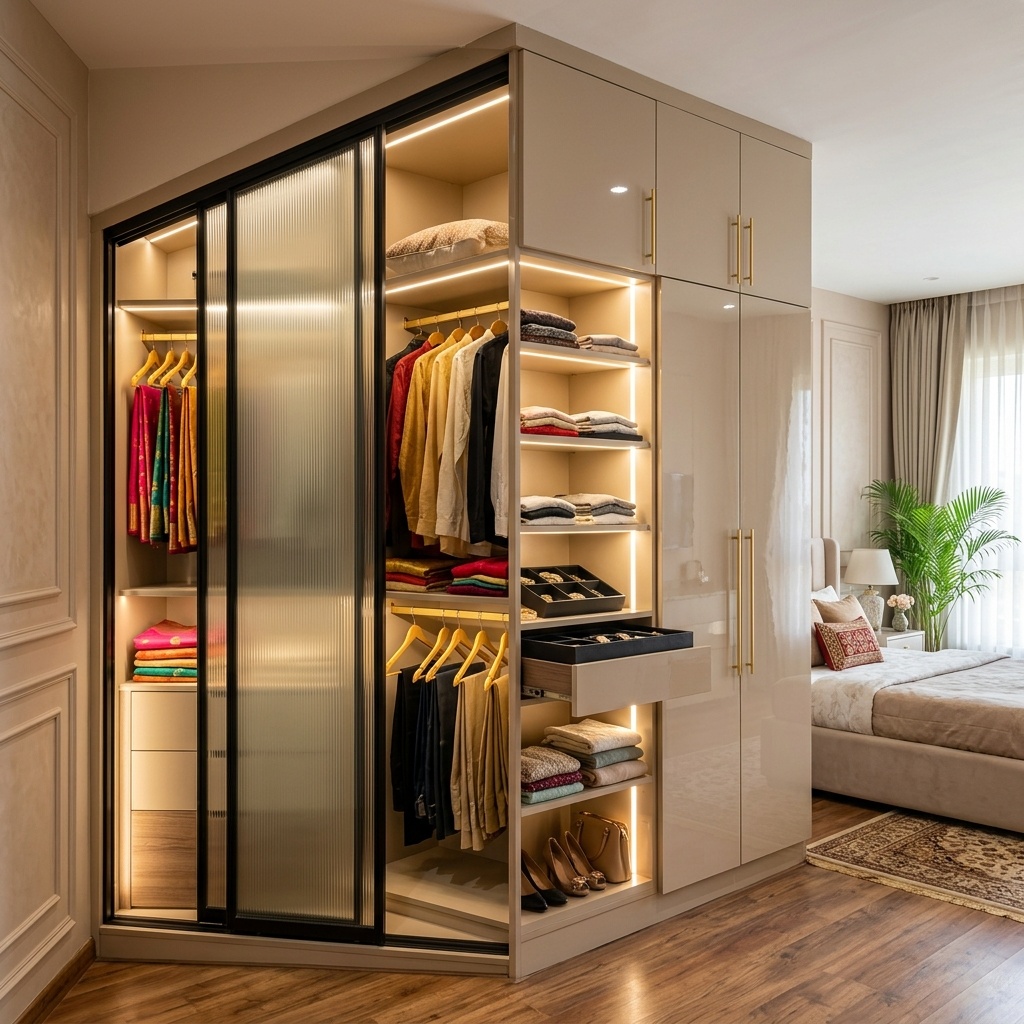
- Walk-in wardrobes need at least 5×7 ft of dedicated space — they're a room, not a piece of furniture
- The internal layout (hanging, shelves, drawers, accessories) matters more than the external door style for daily usability
Quick Answer:For most Indian bedrooms (10×12 ft), a sliding door wardrobe is the most practical choice — it looks modern, saves swing space, and can span an entire wall. For larger bedrooms (12×14 ft+), hinged doors give better access to the full internal space. Walk-in wardrobes are only feasible when there's a dedicated alcove or 5×7 ft room available.
A modular wardrobe lasts 15–20 years. You open it at least twice a day, every day — so every design decision has a decade-long consequence. This guide covers what actually matters: door type for your room size, internal layout for your clothing type, and what to spec before you sign the order.
Door Type Comparison
| Factor | Sliding Doors | Hinged Doors | Walk-In |
|---|---|---|---|
| Space Needed | No swing clearance (ideal for small rooms) | 2–3 ft swing clearance needed in front | Dedicated room or alcove (5×7 ft min) |
| Access | Only half visible at a time | Full width visible when open | Full access, standing room |
| Look / Aesthetic | Modern, sleek, minimalist | Classic, flexible design options | Luxury, walk-in boutique feel |
| Recommended Room Width | Any — ideal under 11 ft | 11 ft+ recommended | 12 ft+ with alcove or separate room |
| Width Range | 4 ft to full wall | 1.5 ft to 10+ ft | As wide as the room |
| Internal Flexibility | Same as hinged | Slightly more flexible (no rail) | Maximum — can add island units |
| Maintenance | Track cleaning needed periodically | Hinge adjustment over time | No door mechanism to maintain |
| Cost (relative) | Mid to high (mirror adds cost) | Mid (standard) | Highest (room + fitting) |
Standard Wardrobe Sizes for Indian Bedrooms
Modular wardrobes are designed in standard width modules (typically 600mm = 2 ft per section) that combine to fill the required wall width. Heights typically go floor-to-ceiling or to a standard 7–8 ft.
| Configuration | Total Width | Best For | Approx Cost |
|---|---|---|---|
| 2-door sliding / 2-door hinged | 3–4 ft (900–1200mm) | Child's room, guest room | ₹35,000–₹70,000 |
| 3-door hinged | 5–6 ft (1500–1800mm) | Standard master bedroom | ₹55,000–₹1,10,000 |
| 4-door sliding | 6–8 ft (1800–2400mm) | Standard master bedroom | ₹65,000–₹1,30,000 |
| 5–6 door sliding (full wall) | 8–12 ft (2400–3600mm) | Large bedroom, full wall coverage | ₹90,000–₹2,00,000+ |
| Walk-in wardrobe (3-wall layout) | 5×7 ft to 6×8 ft room | Luxury master suite | ₹1,50,000–₹4,00,000+ |
Prices vary by material (acrylic vs laminate), accessories, and mirror inclusion. Acrylic finish costs 20–30% more than laminate. Mirror panel doors add ₹800–₹1,500 per sq ft of mirror area.
Internal Layout: What to Plan
The internal layout determines how usable your wardrobe actually is. Most people spec too many shelves and not enough hanging space — then struggle to access folded clothes at the back. Plan by what you actually store:
| Storage Zone | What Goes Here | Recommended % | Standard Dimensions |
|---|---|---|---|
| Long hanging | Sarees, dresses, formal trousers, kurtas | 25–35% of width | 1,800–2,000mm height clearance |
| Short hanging | Shirts, blouses, jackets, children's clothes | 25–35% of width | 900–1,000mm height clearance |
| Shelf zone | Folded clothes, jeans, sweaters | 20–30% of width | 300–400mm per shelf |
| Drawer unit | Innerwear, accessories, small items | 1–2 drawer columns | 150–200mm per drawer |
| Loft / top zone | Seasonal, rarely-used items, luggage | Above main wardrobe | 400–500mm height |
For Indian households: sarees and dupattas need long hanging (minimum 1,800mm height). If the household has sarees, dedicate at least one full section to long hanging — many designers under-specify this.
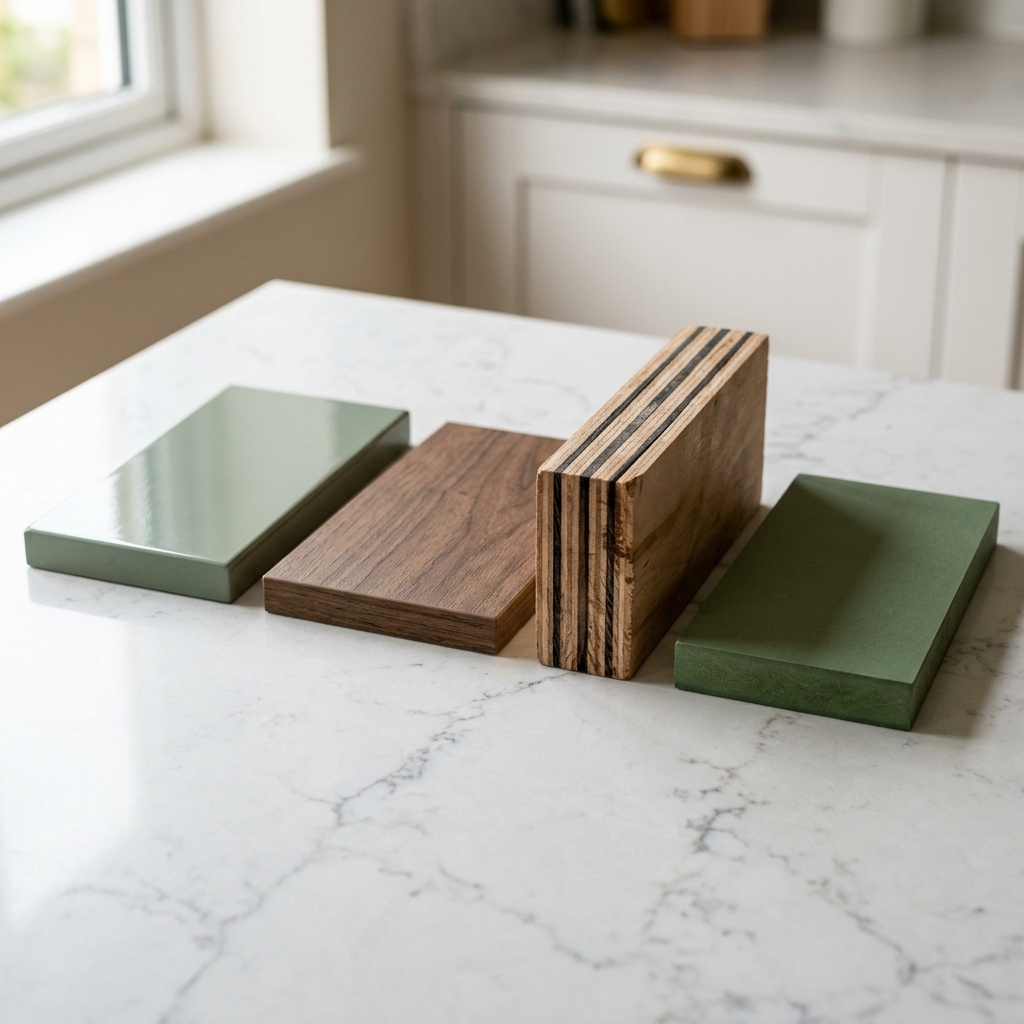
Shutter Finishes for Wardrobes
| Finish | Look | Maintenance | Cost vs Laminate |
|---|---|---|---|
| Laminate | Matt or textured — wide colour range | Easy — wipe clean | Base (1x) |
| Acrylic | High-gloss shine — rich, premium look | Shows fingerprints — microfibre clean | +20–30% |
| PU Paint | Smooth, paint-like finish — soft sheen | More careful cleaning needed | +25–40% |
| Membrane (PVC foil) | Routed 3D profiles and patterns possible | Easy — but avoid sustained heat | +15–25% |
| Mirror panel | Reflective — makes room look larger | Glass cleaning (squeegee) | +₹800–1,500/sq ft of mirror |
Frequently Asked Questions
Which is better — sliding or hinged wardrobe for Indian bedroom?
For bedrooms under 11 ft wide, sliding wardrobes are better — they need no swing clearance, look modern, and allow full-wall configurations. For larger bedrooms (11 ft+) where you want to view the entire wardrobe interior at once, hinged doors are more practical. Hinged doors give full unobstructed access to the complete width; sliding doors always hide half the wardrobe at any given time.
What is the standard size for a modular wardrobe in India?
Standard modular wardrobe sizes in India: 3-door hinged (5–6 ft wide) is the most common master bedroom choice. 4-door sliding (6–8 ft) is popular for full-wall coverage. Depth is typically 600mm (2 ft) for hanging wardrobes. Height is either 7 ft (standard) or floor-to-ceiling (8–10 ft depending on room height). Floor-to-ceiling always provides more storage for the same footprint.
How much does a modular wardrobe cost in Ranchi?
Modular wardrobe costs in Ranchi: a standard 3-door hinged laminate wardrobe starts from ₹55,000–₹80,000 for a 5–6 ft wide unit. A 4–6 door sliding wardrobe ranges from ₹70,000–₹1,50,000 depending on width, finish, and accessories. Acrylic finish costs 20–30% more than laminate. Mirror sliding doors add ₹800–₹1,500 per sq ft of mirror area. Book a free site visit from Ammon Marketing for an exact quote.
What is a walk-in wardrobe and how much space does it need?
A walk-in wardrobe is a dedicated room (or large alcove) with wardrobes on 2–3 walls and a central aisle to walk through. Minimum size: 5 ft × 7 ft. Comfortable size: 6 ft × 8 ft or larger. It requires a separate room or a converted space — typically carved from a large master bedroom or an adjacent small room. Walk-in wardrobes are the most luxurious option but only feasible in homes with sufficient space.
Which material is best for wardrobe shutters in India?
Laminate is the most practical all-round choice for wardrobe shutters — it's durable, available in hundreds of textures and colours, easy to maintain, and cost-effective. Acrylic is ideal if you want a high-gloss premium look and are willing to wipe fingerprints frequently. Mirror panels (on sliding doors) add a room-enlarging effect. Avoid membrane finish in rooms with high humidity or direct sunlight as it can peel over time.
How much hanging space do I need in a wardrobe?
As a rough guide: dedicate at least 50–60% of your wardrobe width to hanging zones (both long and short hanging). For Indian households with sarees, dedicate at least one full section (minimum 2 ft wide, 1,800mm height clearance) to long hanging. The most common planning mistake is over-specifying fixed shelves at the expense of hanging space — then struggling to store long garments without folding them.
Should I choose floor-to-ceiling wardrobe or standard height?
Floor-to-ceiling wardrobes add 30–40% more storage for the same floor footprint — the loft zone above standard height is extremely useful for seasonal storage, luggage, and bulky items. They also look more built-in and premium. The only trade-off: accessing items stored above 7 ft requires a step stool. For most Indian homes with 9–10 ft ceilings, floor-to-ceiling is worth the small additional cost.
What are must-have accessories for a modular wardrobe?
Four accessories that significantly improve daily use: (1) Full-extension soft-close drawer boxes for innerwear and accessories — much better than fixed shelves, (2) Trouser pull-out rack — keeps trousers pressed and visible without folding, (3) Saree/dupatta hanger rods — essential for Indian households with traditional clothing, (4) LED interior strip lighting — transforms the morning routine in a walk-in or deep wardrobe. The rest is optional based on your specific storage needs.
Key Takeaways
- Sliding doors for rooms under 11 ft wide (no swing clearance needed); hinged doors for larger rooms where full-width access matters
- Internal layout matters more than door style — plan by what you actually store: sarees need 1,800mm long hanging, innerwear needs drawers, not shelves
- Floor-to-ceiling configuration adds 30–40% storage without using any extra floor space — worth the modest additional cost in most bedrooms
- Laminate is the most practical shutter finish; acrylic for premium look; mirror panels add visual space to smaller bedrooms
- Walk-in wardrobes need a dedicated 5×7 ft minimum — if you don't have that space, a well-planned full-wall sliding wardrobe serves just as well
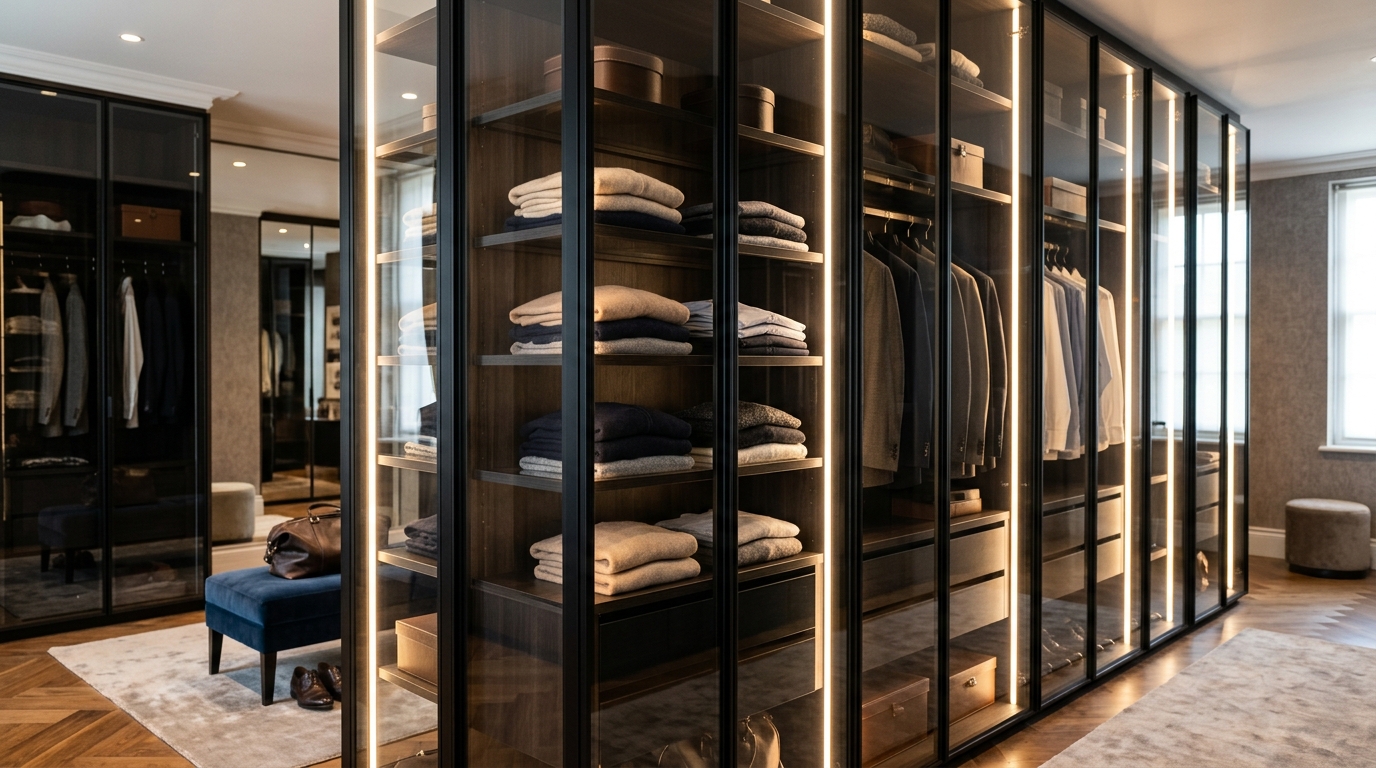
See These Ideas in Real Homes
Free · No Obligation
Talk to Our Design Experts
Ammon Marketing Editorial Team
Authorized Kutchina Dealer · Ranchi · Est. 2014
Our guides are written by Ranchi-based kitchen designers and appliance experts with 10+ years of on-the-ground experience. Every recommendation is based on real projects completed in Jharkhand homes — not generic advice from outside the region.