PVC vs Membrane vs Acrylic Kitchen Shutters: Which Finish Lasts in India?
Ammon Marketing
Authorized Kutchina Dealer · Ranchi
02 Jul 2026
~ read
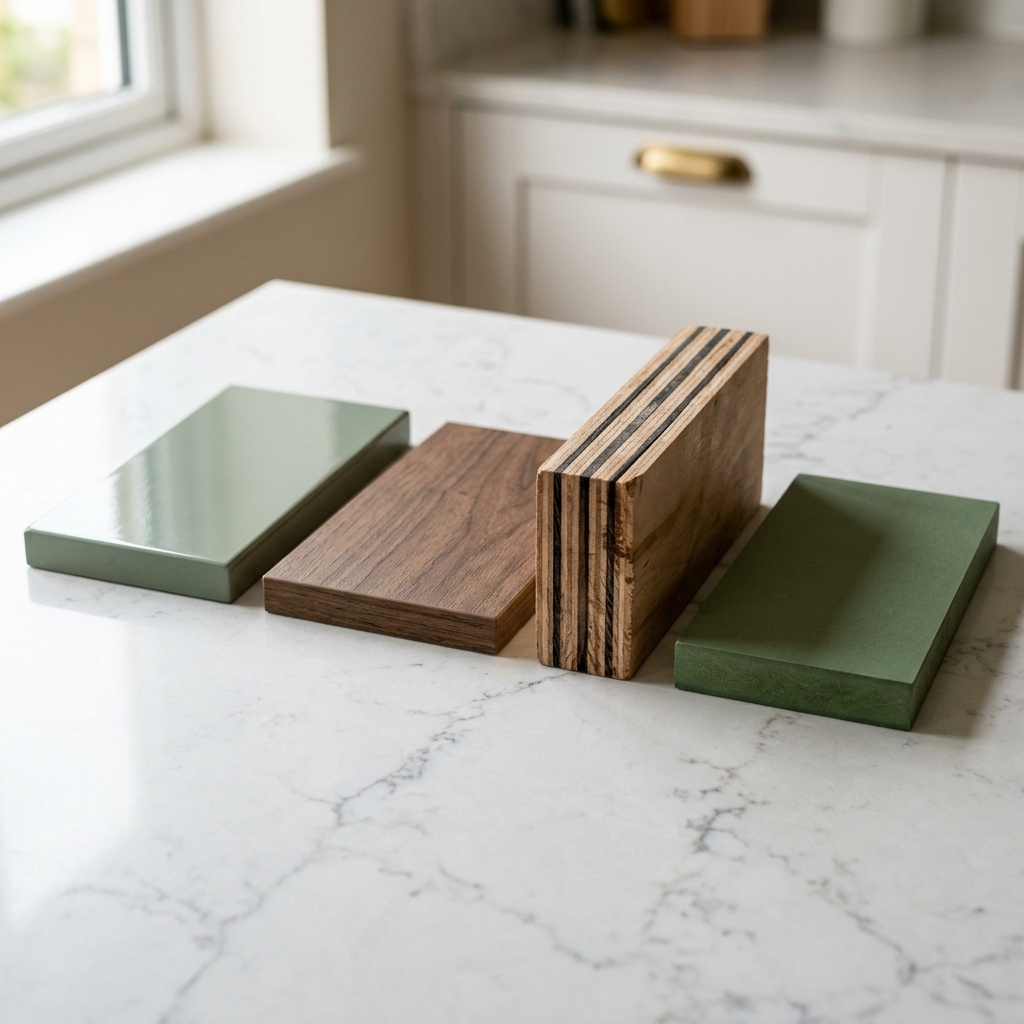
TL;DR
- Acrylic is the most durable and premium shutter finish — high-gloss, scratch-resistant, 10–15 year lifespan with quality carcass
- Membrane finish (PVC film on MDF) is the most affordable and comes in the widest colour range — but edges peel in high-moisture Indian kitchens within 5–8 years
- PVC shutters (full PVC board, not film) are very moisture-resistant but have a plastic appearance — not preferred for premium kitchens
- Laminate (not in name but most common alternative) is the practical middle ground — durable, affordable, huge colour range, matte finish
Quick Answer: For Indian kitchens where long-term durability matters more than initial cost: acrylic finish on BWP carcass is the best choice — stunning appearance, very durable, and available in any colour. For tight budgets: good laminate finish on HDHMR carcass is the practical best-value option. Membrane (PVC film on MDF) has the widest colour selection and lowest cost but is the least durable — edge peeling is a common failure mode in humid Indian conditions within 5–8 years.
Full Shutter Finish Comparison
| Finish | Appearance | Durability | Moisture Resistance | Cost (per sq ft) | Lifespan (Indian kitchen) |
|---|---|---|---|---|---|
| Acrylic | High-gloss, mirror-like; premium look | Excellent — impact and scratch resistant | Excellent — sealed surface | ₹350–₹700 | 10–15 years |
| Laminate (HPL) | Matte, textured, or satin — hundreds of designs | Very good — hard pressed surface | Good — edges need quality edging tape | ₹80–₹200 | 10–15 years with good carcass |
| Membrane (PVC film) | Gloss or matte — widest colour range; can wrap curves | Moderate — film can delaminate at edges | Moderate — film vulnerable at edges in moisture | ₹120–₹280 | 5–8 years (edges peel sooner in humid kitchens) |
| PVC board shutter | Functional, solid colour — less refined appearance | Good — waterproof throughout | Excellent — no edge vulnerability | ₹150–₹300 | 10+ years (but limited colour/design range) |
| PU paint / lacquer | Very smooth matte or satin finish — premium | Excellent — hard, chip-resistant | Very good | ₹400–₹900 | 10–15 years |
| Lacquered glass | Ultra-premium — colour glass panels | Excellent for glass; heavy | Excellent | ₹600–₹1,200 | 15+ years |
Maintenance Reality in Indian Kitchens
| Finish | Fingerprints | Oil Cleaning | Failure Mode |
|---|---|---|---|
| Acrylic (glossy) | High visibility | Easy with microfibre cloth | Scratches show on high gloss; hard to buff out |
| Laminate (matte) | Low visibility | Easy with damp cloth | Edge chip if struck hard; edging tape peels if quality is poor |
| Membrane | Moderate | Easy on flat surface | Edge delamination in steam/moisture zones — near sink and hob |
| PVC board | Low | Easy | Discolouration (yellowing) in direct sunlight over years |
| PU paint | Low (matte) | Very easy | Chips at corners/edges from hard knocks; hard to retouch invisibly |
Frequently Asked Questions
Which is better — acrylic or membrane kitchen shutters?
Acrylic is significantly more durable than membrane for Indian kitchen conditions. Acrylic shutters are made from a solid acrylic sheet bonded to the MDF or board substrate — the finish goes all the way through and cannot peel. Membrane (PVC film) is a thin film wrapped over the substrate — the edges are the vulnerability point, and in the steam and moisture common in Indian kitchens (near the sink and hob), membrane edges begin peeling within 5–8 years. For a 10-15 year kitchen, acrylic is the better investment.
What is membrane finish on modular kitchen?
Membrane finish (also called foil finish or PVC wrap) is a thin PVC film heat-pressed onto an MDF or HDF board substrate. The film gives a smooth, uniform surface available in hundreds of colours and textures (gloss, matte, wood grain, concrete look). It is the most affordable route to a premium-looking finish and can wrap curved door profiles (impossible with laminate). Its main weakness: the edges where the film wraps around the board are the most vulnerable — in humid conditions or near steam sources, the adhesion fails and the film peels.
Is laminate better than acrylic for kitchen?
For daily practicality: laminate (HPL — High Pressure Laminate) is slightly better in one way — the matte surface doesn't show fingerprints or require careful cleaning technique. Acrylic's high-gloss surface shows every fingerprint and needs a microfibre cloth (not a regular cloth) to avoid fine scratches. For appearance and premium feel: acrylic is significantly better. For longevity: both perform similarly (10–15 years) when applied on quality carcass. The decision is mostly about appearance preference and willingness to maintain the finish.
How long does acrylic kitchen shutter last?
Quality acrylic kitchen shutters on BWP plywood or HDHMR carcass last 10–15 years in Indian kitchen conditions. The acrylic surface itself is very hard and scratch-resistant; the board substrate is the more important longevity factor. An acrylic shutter on particle board carcass will fail when the carcass fails (5–7 years); the same acrylic shutter on BWP carcass can last 15+ years. Always ask what the carcass material is — the shutter finish longevity depends on it.
What is the difference between PVC and acrylic kitchen shutters?
"PVC shutters" in Indian market context usually means one of two things: (1) Full PVC board shutters — made entirely of PVC plastic, no substrate, very moisture-resistant but with a plastic appearance and limited colour range, or (2) Membrane shutters — PVC film over MDF board (described above). Acrylic shutters are made from a solid acrylic polymer sheet (not PVC) bonded to the substrate — they have a fundamentally different and superior appearance: deeper gloss, more colour richness, and harder surface than PVC.
Can kitchen shutter finish be changed after installation?
No — kitchen shutter finish cannot be changed without replacing the shutters entirely. The finish (acrylic, laminate, membrane) is integral to the shutter panel construction. If you want to change from laminate to acrylic years later, the old shutters are removed and new shutters in the new finish are manufactured and fitted to the existing carcass boxes — this is possible and costs approximately 30–50% of the original shutter cost (you reuse the carcass). This is why getting the right finish from the start matters.
Which kitchen shutter colour is easiest to maintain in India?
Mid-tone colours in matte or satin finish are the easiest to maintain in Indian kitchens: warm grey, warm white (off-white), beige, and light walnut wood-tone. These hide fingerprints, everyday dust, and minor oil splatter better than either very light (pure white shows every mark) or very dark colours (shows water drops and dust very clearly). Matte finish in any colour is always easier to maintain than gloss — gloss shows cleaning streaks and fingerprints more readily.
Is there a better alternative to membrane shutters for budget kitchens?
Yes — good laminate on HDHMR or BWP carcass is a better alternative to membrane shutters for budget-conscious Indian kitchens. Laminate (HPL — High Pressure Laminate) costs similarly to membrane (₹80–₹200/sq ft) but is significantly more durable — it is hard-pressed under high heat and pressure, with no film edge vulnerability. The limitation vs membrane: laminate cannot wrap curves or shaped profiles. For flat-door kitchens (the most common Indian modular kitchen style), laminate beats membrane on durability at the same price point.
Key Takeaways
- Acrylic: most premium appearance, most durable — best choice if budget allows (₹350–₹700/sq ft)
- Laminate (HPL): best value — durable, affordable, huge design range, matte finish (₹80–₹200/sq ft)
- Membrane: lowest cost, widest colour range — but edge peeling in Indian kitchen humidity is a known failure mode after 5–8 years
- For any finish, the carcass material determines longevity — acrylic on particle board fails just as fast as membrane on particle board
- Shutter finish can be changed later (replace shutters on existing carcass) — but getting it right from the start costs less
See These Ideas in Real Homes
Free · No Obligation
Talk to Our Design Experts
Ammon Marketing Editorial Team
Authorized Kutchina Dealer · Ranchi · Est. 2014
Our guides are written by Ranchi-based kitchen designers and appliance experts with 10+ years of on-the-ground experience. Every recommendation is based on real projects completed in Jharkhand homes — not generic advice from outside the region.