Modular Wardrobe vs Built-In Almirah: Which Is Better for Indian Bedrooms?
Ammon Marketing
Authorized Kutchina Dealer · Ranchi
02 Jul 2026
~ read
TL;DR
- Modular wardrobe wins on storage efficiency, internal organisation, finish quality, and flexibility
- Built-in almirah (RCC or carpenter) is cheaper upfront and extremely durable structurally — but fixed, hard to modify, and poor for internal organisation
- For new construction, a modular wardrobe is almost always the better long-term investment
- For renovation where a built-in almirah already exists and is structurally sound, keep it and improve the internals — replacement cost is rarely justified
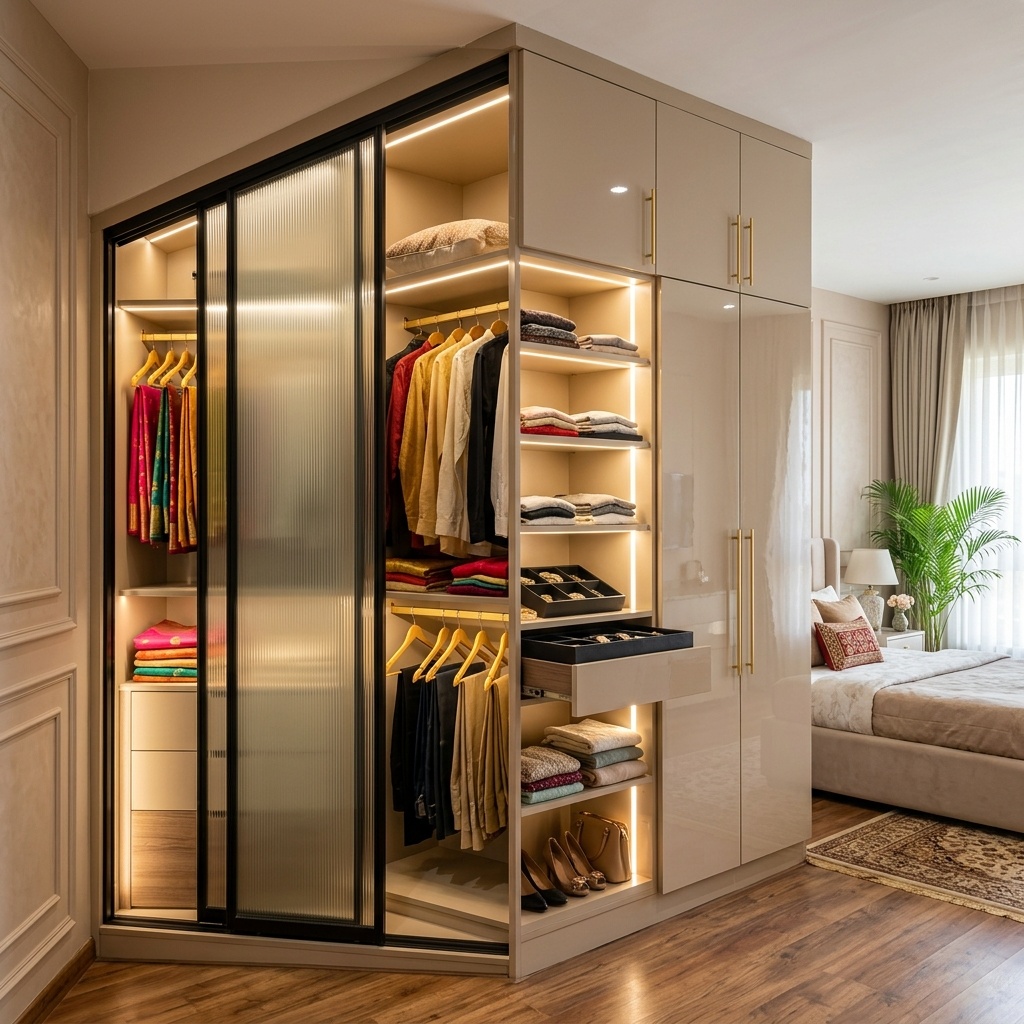
Quick Answer: For a new bedroom, a modular wardrobe gives significantly better storage organisation, more modern appearance, and more flexibility than a built-in RCC or carpenter almirah. For an existing bedroom with a structurally sound built-in almirah, replacing it with a modular wardrobe requires demolition and is usually not cost-effective unless the existing storage is genuinely dysfunctional.
Full Comparison
| Factor | Modular Wardrobe | Built-In Almirah (RCC/Carpenter) |
|---|---|---|
| Upfront Cost | ₹35,000–₹2,00,000+ | ₹15,000–₹60,000 (carpenter); RCC much lower if done during construction |
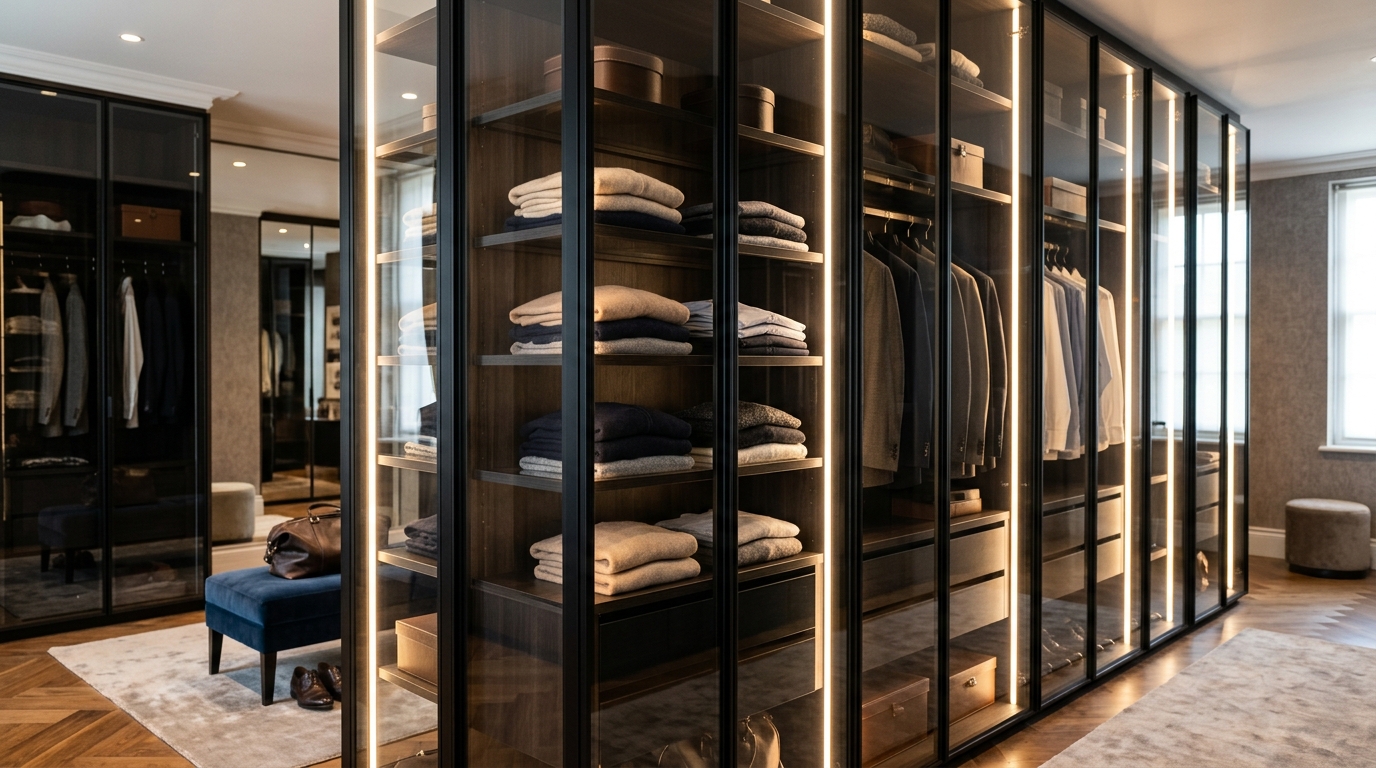
| Internal Organisation | Highly customised — shelves, drawers, hanging zones to specification | Usually basic shelves and one hanging bar — poor organisation |
| Internal Accessories | Drawer boxes, saree hangers, trouser racks, LED lighting available | None standard — add-ons difficult to retrofit |
| Finish Quality | Acrylic, laminate, or PU paint — premium appearance | Enamel paint or PVC laminate — functional but less premium |
| Flexibility | Modifiable — internal layout can be changed by moving shelves/brackets | Fixed — RCC cannot be changed; carpenter almirah difficult to modify |
| Portability | Can be dismantled and reinstalled (with some effort and cost) | RCC is permanent; carpenter almirah is fixed to wall |
| Structural Durability | Very good — 15–20 years with quality carcass (BWP/HDHMR) | Exceptional for RCC — permanent; carpenter varies |
| Moisture Resistance | Good with BWP or HDHMR carcass | Excellent for RCC; carpenter varies by wood quality |
| Lead Time | 2–4 weeks manufacturing + installation | Carpenter: 1–2 weeks on-site; RCC: during construction phase only |
| Maintenance | Periodic hinge adjustment; shutter cleaning | Repainting every 5–7 years; hinge oiling |
When to Choose Modular Wardrobe
- New construction or full bedroom renovation — modular is the right choice when starting fresh
- When internal organisation is a priority — large wardrobe collections, sarees, suit sections, dedicated drawer zones
- When premium appearance matters — acrylic and PU finishes are not achievable with traditional carpenter work
- When flexibility is needed — ability to reconfigure internal layout as clothing collection changes over the years
- When you plan to move and want to take the wardrobe — modular is dismantlable
When to Keep the Built-In Almirah
- Existing RCC almirah is structurally sound and just needs cosmetic refresh — repainting or adding internal organiser accessories is far cheaper than replacement
- Tight budget — a functional existing almirah saves ₹50,000–₹1,50,000 that can go toward more impactful home upgrades
- The existing built-in perfectly fits the wall space — custom sizing is already achieved
- Renovation timeline is short — demolishing and rebuilding takes more time than simply refinishing
Frequently Asked Questions
Which is better — modular wardrobe or built-in almirah?
For new construction or full renovation, a modular wardrobe is better — it offers superior internal organisation, premium finishes, customised internal layout, and flexibility to modify over time. For an existing bedroom with a structurally sound built-in almirah, the cost and disruption of replacement rarely justifies the upgrade unless the existing storage is genuinely dysfunctional.
Is modular wardrobe more expensive than carpenter wardrobe?
Yes — modular wardrobes cost more upfront than traditional carpenter-built wardrobes for the same dimensions. A modular 3-door sliding wardrobe costs ₹55,000–₹1,20,000; a carpenter equivalent is ₹20,000–₹45,000. The premium reflects factory manufacturing precision, better internal accessories availability, premium finish options (acrylic/PU), and branded hardware. For long-term daily use and appearance, most homeowners find the modular premium worthwhile.
Can I convert a built-in almirah into a modular wardrobe?
You can add internal modular accessories (shelf inserts, drawer boxes, hanging rods) to an existing built-in almirah — this is a cost-effective upgrade that doesn't require demolition. However, the external appearance (doors, finish) is hard to upgrade without full replacement. For a true modular wardrobe appearance and functionality, demolition of the built-in and new modular installation is needed — typically ₹60,000–₹1,50,000 all in.
How long does a modular wardrobe last?
A quality modular wardrobe with 18mm BWP plywood or HDHMR carcass and branded hardware (Blum/Hettich) lasts 15–20 years with basic maintenance. The shutters (acrylic or laminate finish) maintain their appearance for 10–15 years. Hardware (hinges, drawer runners) with branded systems lasts 10+ years with occasional adjustment. A built-in RCC almirah is essentially permanent structurally, but the internal fixtures and paintwork need renewal every 7–10 years.
What is a built-in almirah?
A built-in almirah (or fitted cupboard) is storage built directly into the bedroom wall structure — either as part of the RCC (reinforced concrete) construction during building, or built by a carpenter using brick/block or wood framing after construction. It is a permanent fixture of the room, not freestanding furniture. Unlike modular wardrobes, built-in almirahs cannot be easily removed or taken when moving.
Is sliding door wardrobe or hinged door better than almirah?
Both sliding and hinged modular wardrobes are superior to traditional almirahs for internal organisation and finish quality. Sliding doors suit rooms under 11 ft wide (no swing clearance needed); hinged doors give full-width access and suit larger rooms. Traditional almirahs typically have hinged doors — but the door mechanism and internal organisation of modular wardrobes are far more refined than traditional carpenter work.
Can built-in wardrobe be dismantled and moved?
RCC built-in almirahs cannot be dismantled — they are part of the building structure. Carpenter-built almirahs can sometimes be partially dismantled but the wood/MDF rarely survives disassembly cleanly enough to be useful at the new location. Modular wardrobes, by contrast, are designed in bolt-together modules — they can be dismantled and reinstalled at a new location, though re-installation cost (30–40% of original cost) is significant. For renters, modular is therefore the better choice if moving is planned.
What is the cost of replacing a built-in almirah with a modular wardrobe?
Total cost of replacing a built-in almirah with a modular wardrobe: demolition of existing (₹3,000–₹10,000), wall repair and painting (₹2,000–₹8,000), new modular wardrobe supply and installation (₹40,000–₹1,50,000 depending on size and finish). Total: ₹45,000–₹1,70,000. This is only worthwhile if the existing almirah is structurally failing, functionally inadequate, or if a complete bedroom renovation is already underway and the cost is absorbed into the overall project.
Key Takeaways
- Modular wardrobe is the right choice for new construction or full renovation — superior organisation, finish, and flexibility
- Existing structurally sound built-in almirah: add internal organiser accessories instead of demolishing — far better ROI
- Modular costs more upfront but delivers 15–20 years of quality performance with branded hardware
- RCC built-in is permanent and cannot be taken when moving; modular wardrobe is dismantlable (with cost)
- For renters who plan to move: modular wardrobe is preferable to built-in — it can be taken along
See These Ideas in Real Homes
Free · No Obligation
Talk to Our Design Experts
Ammon Marketing Editorial Team
Authorized Kutchina Dealer · Ranchi · Est. 2014
Our guides are written by Ranchi-based kitchen designers and appliance experts with 10+ years of on-the-ground experience. Every recommendation is based on real projects completed in Jharkhand homes — not generic advice from outside the region.