What Is a Modular Kitchen? Complete Beginner's Guide (2026)
Ammon Marketing
Authorized Kutchina Dealer · Ranchi
01 Jul 2026
~ read
TL;DR
- A modular kitchen is built from factory-made cabinet modules assembled at your home — not built from scratch on-site like a carpenter kitchen
- It has 5 main components: carcass (box), shutters (doors), countertop, hardware, and electrical appliances
- The 5 layouts are: straight, L-shaped, parallel, U-shaped, and island — L-shaped fits most Indian homes best
- A modular kitchen starts at ₹80,000 and typically costs ₹1.5–₹3.5 lakh for a standard Indian kitchen
Quick Answer: A modular kitchen is a kitchen built from standardised, factory-manufactured cabinet units called modules. Each module has a specific function — base units for storage and appliances, wall units for overhead storage, tall units for pantry or refrigerator. Modules are produced in a factory, then assembled at your home in 2–3 days. A standard modular kitchen in India starts at ₹80,000.
If you've been comparing quotes, visiting showrooms, or simply trying to understand what your architect means when they say "modular kitchen" — this guide covers everything from the definition to the cost, in plain language.
What Is a Modular Kitchen?
A modular kitchen is a kitchen system made from pre-manufactured, standardised cabinet boxes — called modules — that are assembled together at your home to create a complete, functional kitchen.
The word "modular" comes from the fact that the kitchen is made of individual modules (units), each produced in a factory under controlled conditions. Unlike a carpenter kitchen, where everything is built from scratch at your home using raw wood, a modular kitchen arrives at your door as pre-built boxes that are installed, fitted, and finished in 2–3 days.
This matters because factory production means every cabinet is made to exact measurements, with consistent finish quality and tested hardware — things a carpenter doing on-site work cannot guarantee.
Important distinction: A modular kitchen is not the same as a carpenter-made kitchen that "looks modular." The term specifically refers to factory-manufactured cabinet modules with standardised dimensions — not any kitchen with cabinet doors and a countertop.
What Does a Modular Kitchen Consist Of?
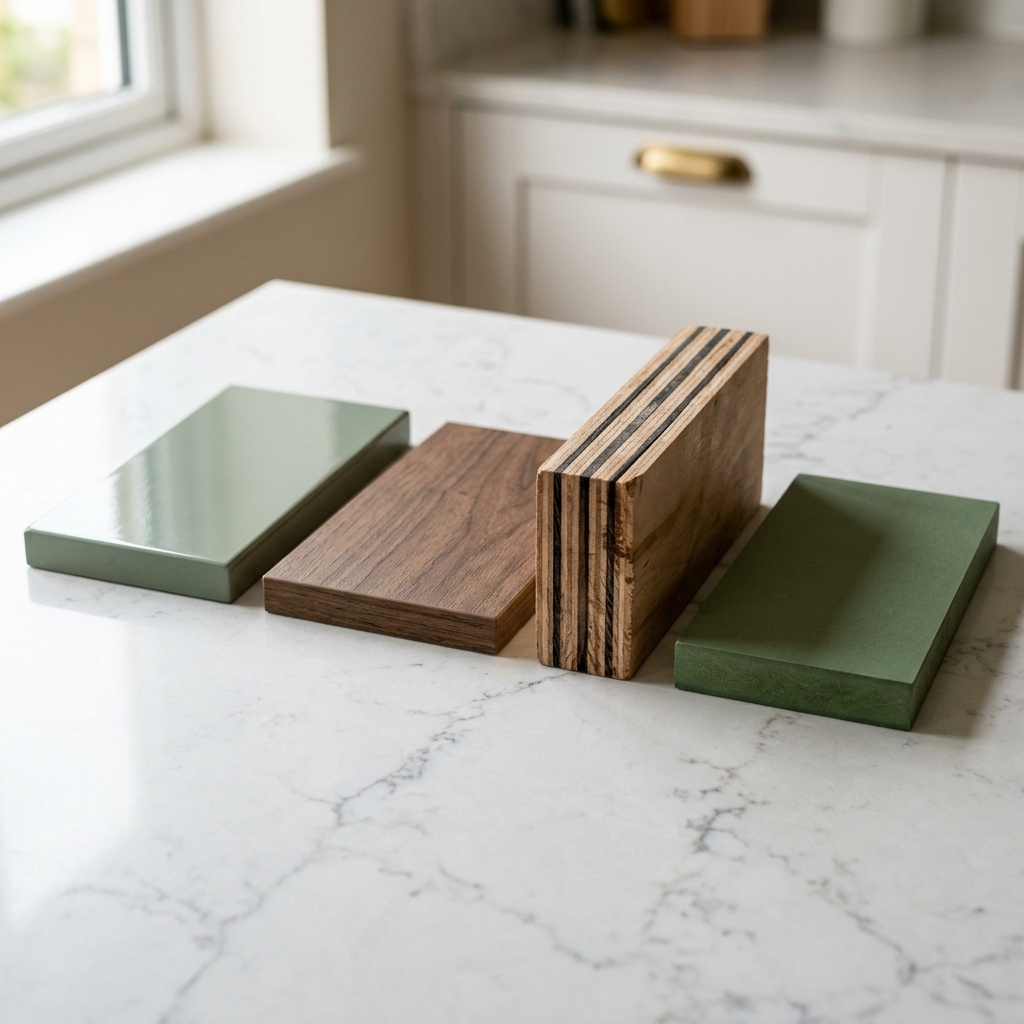
A modular kitchen has 5 core components. Understanding each one helps you make better decisions when getting quotes and comparing dealers.
| Component | What It Is | Cost Share | What to Look For |
|---|---|---|---|
| Carcass | The box structure of each cabinet — the skeleton everything else attaches to | 35–40% | BWR plywood or HDHMR for kitchens; avoid plain MDF in humid climates |
| Shutters | The cabinet doors — what you see and touch every day | 20–25% | Laminate for durability; acrylic for premium look; membrane for contemporary feel |
| Countertop | The work surface where you prepare food — sits on top of base cabinets | 10–15% | Granite (affordable, popular in India); quartz (premium, stain-resistant) |
| Hardware | Hinges, drawer slides, pull-out baskets, handles — the moving parts | 15–20% | Hettich, Hafele, or Blum branded hardware lasts 10–15 years; avoid generic |
| Appliances | Chimney, hob, sink — often quoted separately but fitted into the kitchen | 15–25% | Choose chimney first — its position determines your kitchen layout design |
Cost shares are approximate percentages of total modular kitchen budget (excluding appliances)
5 Types of Modular Kitchen Layouts
The layout is determined by how your kitchen space is shaped — the number of walls available for cabinets, the location of windows and doors, and how you move within the space. Here are the 5 standard layouts:
| Layout | Best For | Minimum Space | Why Choose It |
|---|---|---|---|
| Straight (Single Wall) | Small apartments, studio flats | 6 × 6 ft | Compact, low cost, works in narrow kitchens |
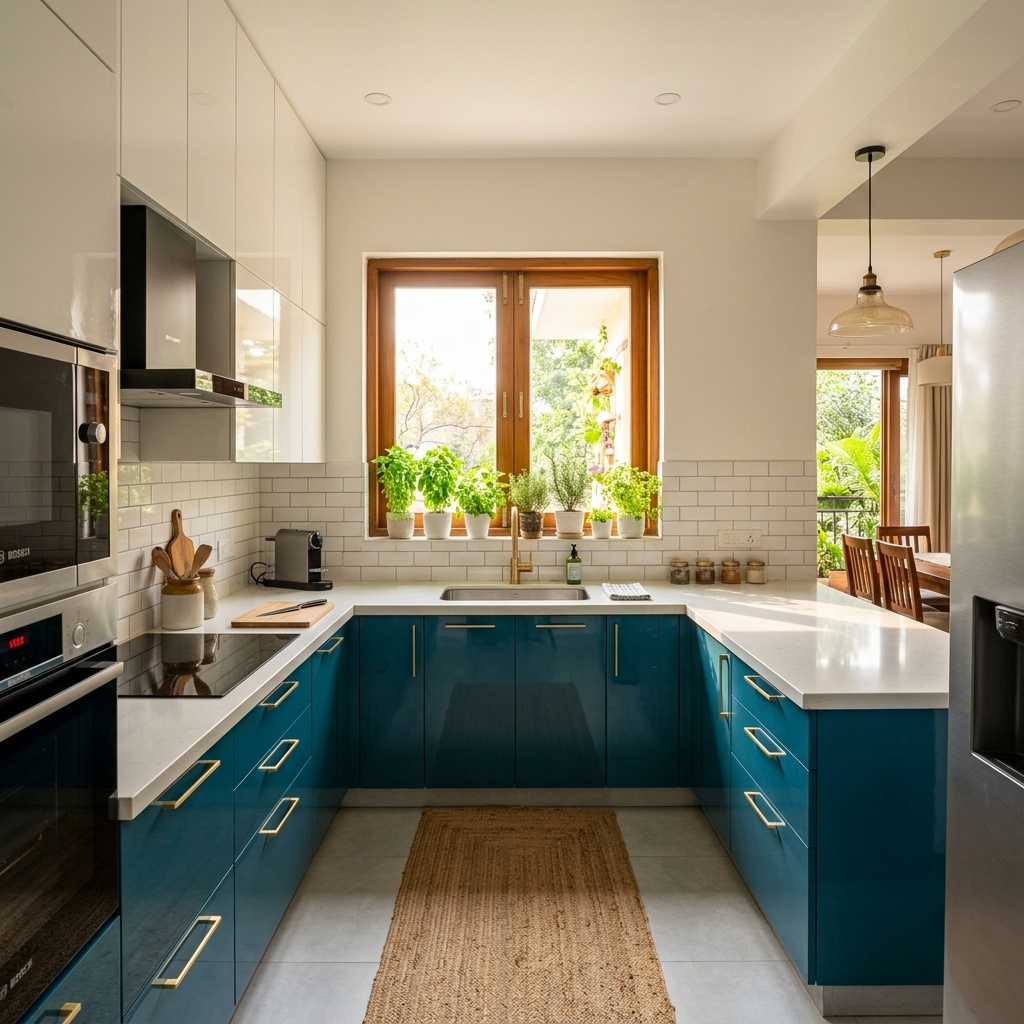
| L-Shaped | Most Indian homes — 2 BHK, 3 BHK | 8 × 10 ft | Best work triangle, flexible, suits open and closed kitchens |
| Parallel (Double Wall) | Long, narrow kitchens with 2 opposite walls | 7 × 10 ft | Maximum storage on both sides, efficient workflow |
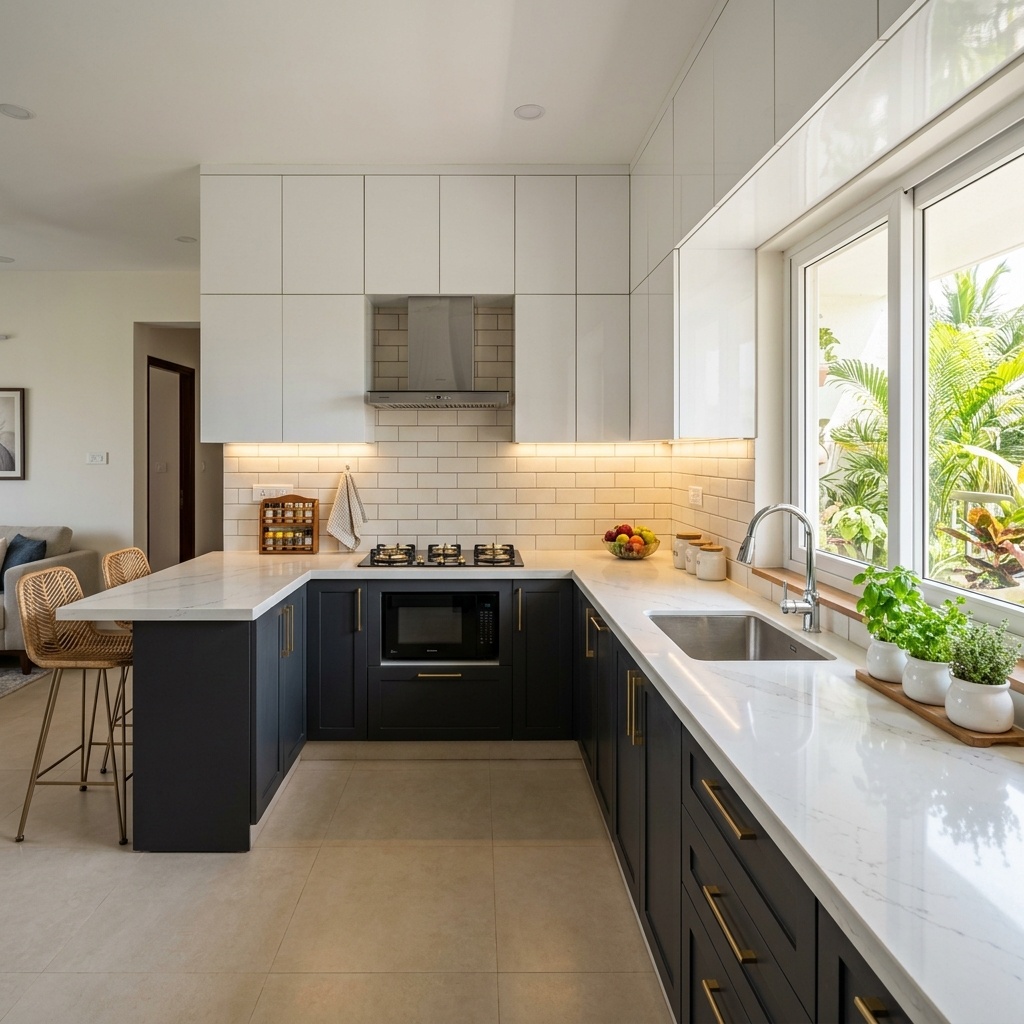
| U-Shaped | Large kitchens, families who cook a lot | 10 × 10 ft | Maximum counter and storage space, best for heavy cooking |
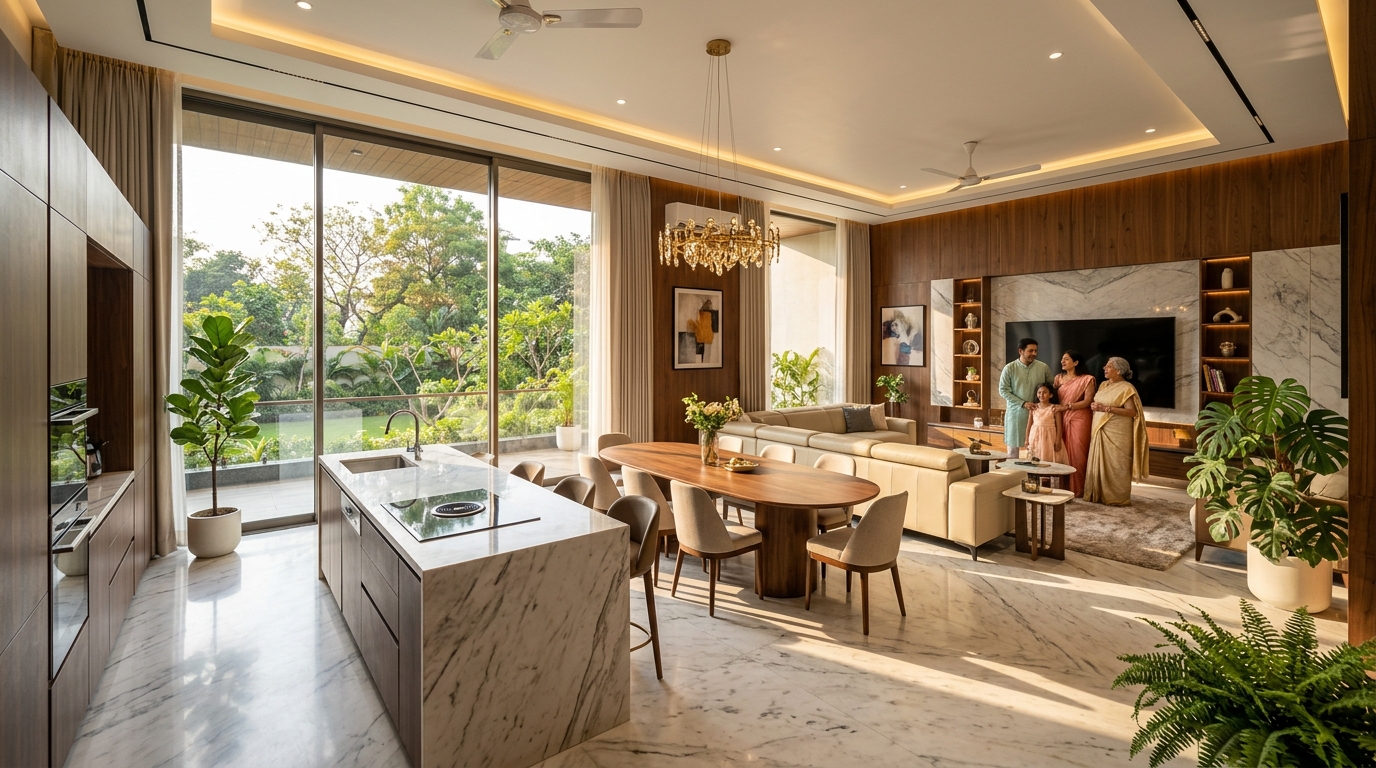
| Island | Open-plan homes, large spaces | 12 × 14 ft | Extra prep space, dining seating, visual centrepiece |
The L-shaped layout is the most popular in Indian homes — it fits almost any kitchen shape, maximises counter space, and keeps your sink, stove, and refrigerator within a comfortable triangle.
Modular Kitchen vs Traditional Kitchen: Key Differences
When people ask "what is a modular kitchen concept?" they're really asking how it differs from the kitchen they grew up with.
| Feature | Modular Kitchen | Traditional / Carpenter Kitchen |
|---|---|---|
| How it's made | Factory-manufactured modules, assembled on-site | Built from scratch at your home using raw materials |
| Installation time | 2–3 days | 25–60 days of workers in your home |
| Consistency | Factory precision — every cabinet exact | Depends on carpenter's skill on that day |
| Warranty | 5–10 years from authorized dealers | Usually none in writing |
| Modification | Individual module replacement possible | Often requires full demolition and redo |
| Cost (upfront) | Higher — ₹80,000 to ₹5,00,000+ | Lower — ₹50,000 to ₹3,00,000 |
| Cost (10 years) | Lower — warranty covers repairs | Often higher — repairs and partial redo needed |
| Hygiene | Concealed storage, easy-to-clean surfaces | Depends on design and materials used |
Is a Modular Kitchen Right for Indian Cooking?
This is the most common concern: Indian cooking involves high heat, strong spices, oil splatters, and steam — is a modular kitchen built to handle this?
Yes — when the right materials are chosen. A modular kitchen with BWR plywood or HDHMR carcass, a chimney rated for 1300+ m³/hr, a proper countertop, and a stainless steel backsplash handles decades of Indian cooking without issues.
Where problems arise: cheap MDF carcasses in humid kitchens (they swell), inadequate chimneys (oil settles on cabinets), and glass or high-gloss shutters near the hob (they stain and scratch). These are material and planning mistakes, not a problem with modular kitchens as a concept.
Ranchi note: Jharkhand's hot, humid summers and heavy monsoon season make material choice critical. Always ask for BWR plywood or HDHMR carcass — not plain MDF. And invest in a chimney with at least 1200 m³/hr suction to protect your cabinets from grease buildup.
How Much Does a Modular Kitchen Cost in India?
Modular kitchen pricing depends on layout size, material choice, and whether you go with an authorized brand dealer or a local manufacturer.
- Straight layout, budget materials: ₹80,000–₹1,20,000
- L-shaped, mid-range (most popular): ₹1,50,000–₹2,80,000
- U-shaped, premium: ₹3,00,000–₹5,00,000+
For Ranchi-specific pricing with layout-wise breakdowns, see our Modular Kitchen Cost in Ranchi guide. To understand how to calculate your own estimate, read How to Calculate Modular Kitchen Cost.
Frequently Asked Questions
What is a modular kitchen in simple terms?
A modular kitchen is a kitchen made from factory-built cabinet boxes that are assembled at your home. Each box (module) has a specific role — storing dishes, housing the oven, or providing drawer space. Think of it like furniture from a catalogue, but for your entire kitchen, fitted precisely to your walls.
What is the modular kitchen concept vs normal kitchen?
A modular kitchen uses standardised, pre-built units assembled on-site in 2–3 days. A normal (carpenter) kitchen is built from scratch at your home over 4–8 weeks. The modular concept means units are interchangeable — you can replace one cabinet without redoing the whole kitchen.
What does a modular kitchen consist of?
Five components: (1) Carcass — the cabinet box structure, (2) Shutters — the cabinet doors, (3) Countertop — the work surface, (4) Hardware — hinges, slides, pull-outs, and (5) Appliances — chimney, hob, sink. The carcass is the most important — it determines how long the kitchen lasts.
Which modular kitchen layout is best for Indian homes?
L-shaped is best for most Indian homes because it accommodates a proper work triangle (hob, sink, refrigerator within 10–12 ft), fits standard 2 BHK kitchen sizes, and provides the best balance of counter space and storage. U-shaped is better if you cook a lot and have a larger kitchen.
Can a modular kitchen be made for a small kitchen?
Yes. A straight-wall layout works in kitchens as small as 6×6 ft. L-shaped works from 7×8 ft. The key for small kitchens is vertical space — use tall units and wall cabinets up to the ceiling, and add pull-out drawers and corner carousels to maximise every inch.
What is modular kitchen in Hindi (मॉड्यूलर किचन क्या होता है)?
मॉड्यूलर किचन एक ऐसा किचन है जो फ़ैक्ट्री में बने तैयार कैबिनेट बॉक्स से मिलकर बनता है — जिसे आपके घर में असेम्बल किया जाता है। यह बढ़ई के हाथ से बने किचन से अलग होता है क्योंकि इसमें एक-एक मॉड्यूल (हिस्सा) बदला जा सकता है और वारंटी मिलती है।
Is modular kitchen worth it for Indian cooking?
Yes, if you choose the right materials — BWR plywood or HDHMR carcass (not MDF), a chimney with 1200+ m³/hr suction, and a stainless steel or granite backsplash near the hob. Indian cooking produces a lot of heat, oil, and steam; the kitchen materials need to handle all three. The modular concept itself is fine — the material selection determines how well it holds up.
How long does a modular kitchen last in India?
A well-made modular kitchen with quality materials lasts 15–25 years. The carcass (if BWR plywood or HDHMR) will last 20+ years. Shutters may need replacement after 10–15 years depending on finish and kitchen usage. Hardware from brands like Hettich or Hafele carries 10-year warranties. The kitchen's longevity depends mostly on material quality at purchase time.
Key Takeaways
- A modular kitchen is made of factory-built cabinet modules assembled on-site — the key difference from a carpenter kitchen is factory precision, consistency, and written warranty
- It has 5 components: carcass, shutters, countertop, hardware, and appliances — the carcass material is the single most important quality decision
- L-shaped is the best layout for most Indian kitchens; U-shaped is best for larger kitchens and families who cook daily
- A modular kitchen handles Indian cooking well when the right materials are chosen — BWR plywood or HDHMR carcass, not MDF
- Expect to spend ₹1.5–₹3.5 lakh for a standard Indian kitchen; a 10-year warranty from an authorized dealer protects your investment
See These Ideas in Real Homes
Free · No Obligation
Talk to Our Design Experts
Ammon Marketing Editorial Team
Authorized Kutchina Dealer · Ranchi · Est. 2014
Our guides are written by Ranchi-based kitchen designers and appliance experts with 10+ years of on-the-ground experience. Every recommendation is based on real projects completed in Jharkhand homes — not generic advice from outside the region.